nubia Z70 Ultra
Introduction
Give us a special camera system any day of the week, and you'll be sure to keep us entertained. Few brands do unusual imaging setups quite like nubia, and with the latest Z70 Ultra, we have another combo of focal lengths that no one can quite match. Together with some more cutting-edge hardware, the newest 35mm camera is packaged in a standout body, making for an overall very appealing proposition. But just how good is it in reality?
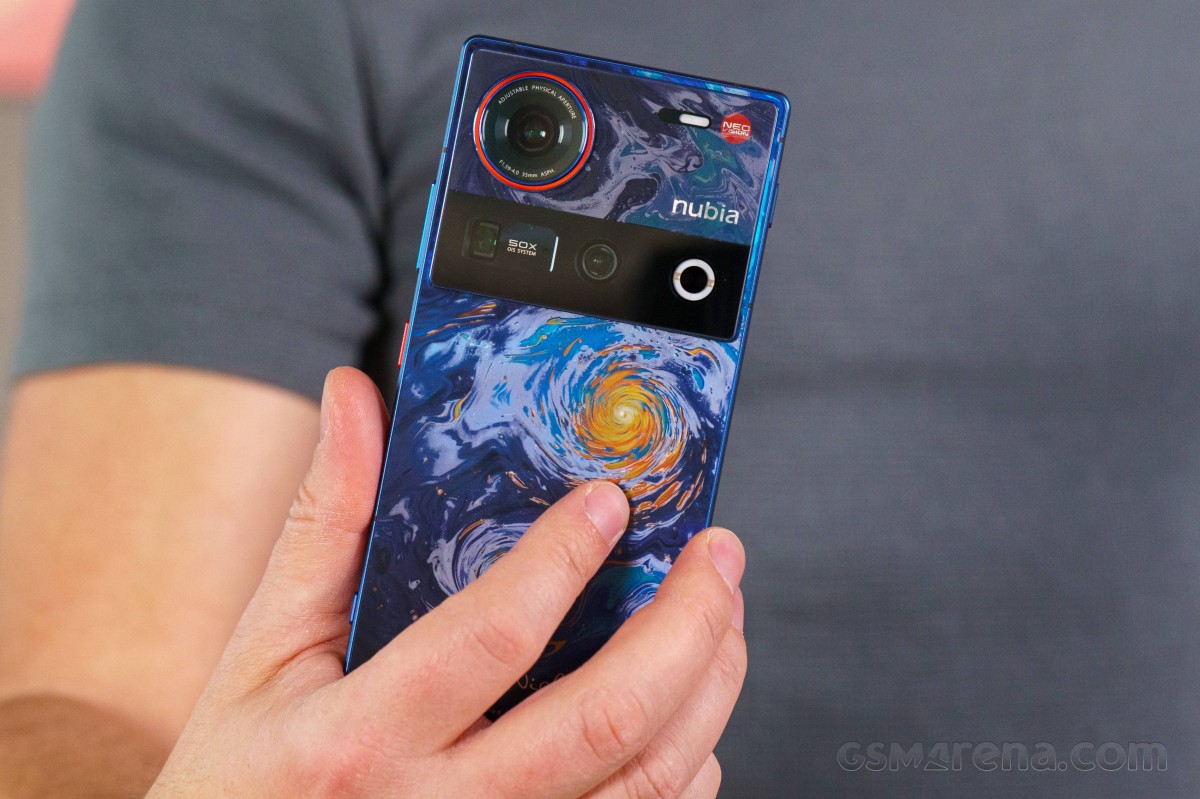
The nubia Z70 Ultra is another iteration of parent company ZTE's quest on making the ultimate 35mm cameraphone. This time around, they've added a variable aperture to the main camera's lens, updated the telephoto to allow close focusing, and fitted an ultrawide camera with some extra wide coverage. Few good things come without trade-offs, though, and we'll need to see what the engineers had to sacrifice.
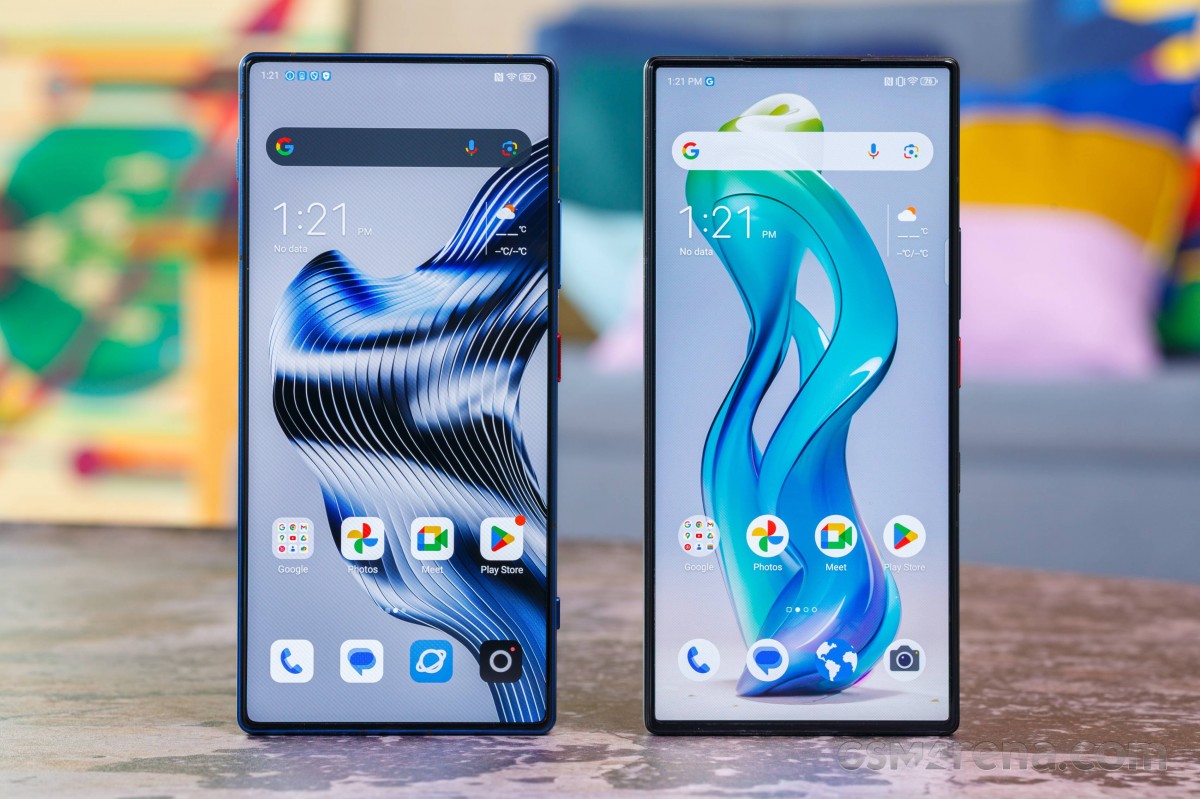 nubia Z70 Ultra (left) next to Z60 Ultra
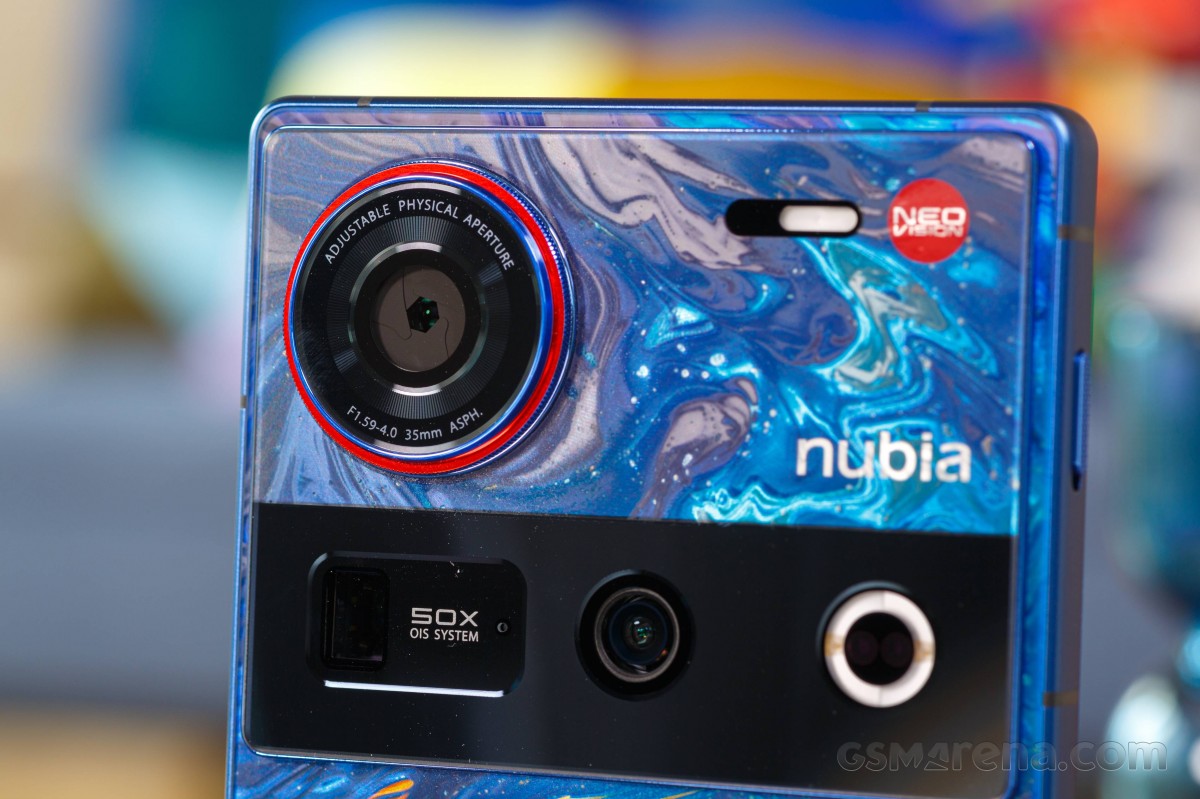
No sacrifices were made in the chipset department, the newest Snapdragon 8 Elite ticking inside the Z70 Ultra, and nubia also joins the industry's move towards silicon carbon batteries. The trendy IP69 rating also makes it to the blocky body, itself made particularly eye-catching in this optional Starry Night colorway. Also hard to miss (or is it hard to spot?) is the lack of a selfie camera hole in the display - improving on the under-display solution is another of the company's ongoing pursuits.
ZTE nubia Z70 Ultra specs at a glance:
- Body: 164.3x77.1x8.6mm, 228g; Glass front, aluminum frame, glass back; IP68/IP69 dust/water resistant (up to 1.5m for 30 min).
- Display: 6.85" AMOLED, 1B colors, 144Hz, HDR10, 2000 nits (peak), 1216x2688px resolution, 19.89:9 aspect ratio, 431ppi.
- Chipset: Qualcomm SM8750-AB Snapdragon 8 Elite (3 nm): Octa-core (2x4.32 GHz Oryon V2 Phoenix L + 6x3.53 GHz Oryon V2 Phoenix M); Adreno 830.
- Memory: 256GB 12GB RAM, 512GB 16GB RAM, 1TB 16GB RAM, 1TB 24GB RAM; UFS 4.0.
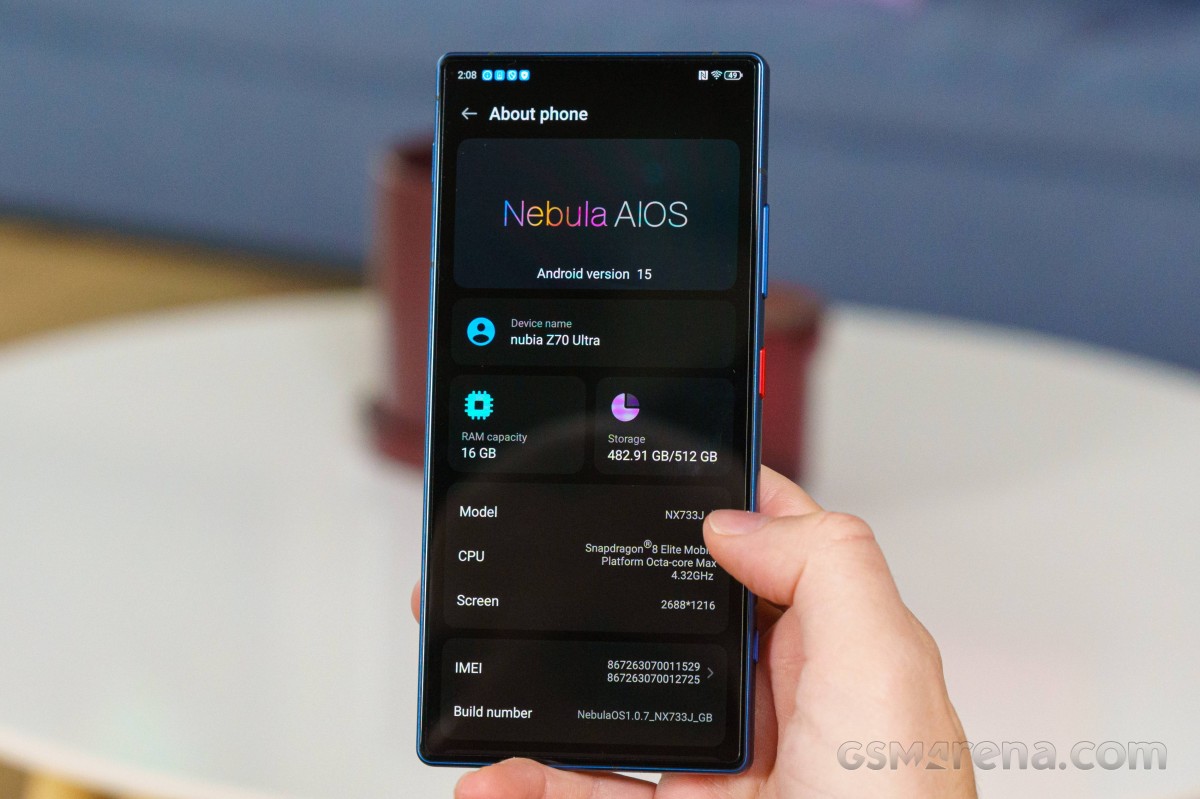
- OS/Software: Android 15, Nebula AIOS.
- Rear camera: Wide (main): 50 MP, f/1.6-4.0, 35mm (standard), 1/1.56", 1.0µm, PDAF, OIS; Ultra wide angle: 50 MP, f/2.0, 13mm, 122˚, 1/2.88", AF; Telephoto: 64 MP, f/2.5, 70mm, 1/2.0", 0.7µm, PDAF (15cm - ∞), OIS, 2.7x optical zoom (vs. 26mm cam).
- Front camera: 16 MP, f/2.0, 24mm (wide), under display.
- Video capture: Rear camera: 8K@30fps, 4K@30/60/120fps, 1080p@30/60fps, gyro-EIS, HDR10, 10‑bit video; Front camera: 1080p@30fps.
- Battery: 6150mAh; 80W wired, PD3.0, QC4.
- Connectivity: 5G; Dual SIM; Wi-Fi 7; BT 5.4, aptX HD, aptX Adaptive; NFC; Infrared port.
- Misc: Fingerprint reader (under display, optical); stereo speakers.
nubia Z70 Ultra unboxing
Our review unit did not arrive in the standard retail packaging you'd expect to see at your doorstep after you order a Z70 Ultra. That said, we do have the full set of accessories that should ship with the phone.
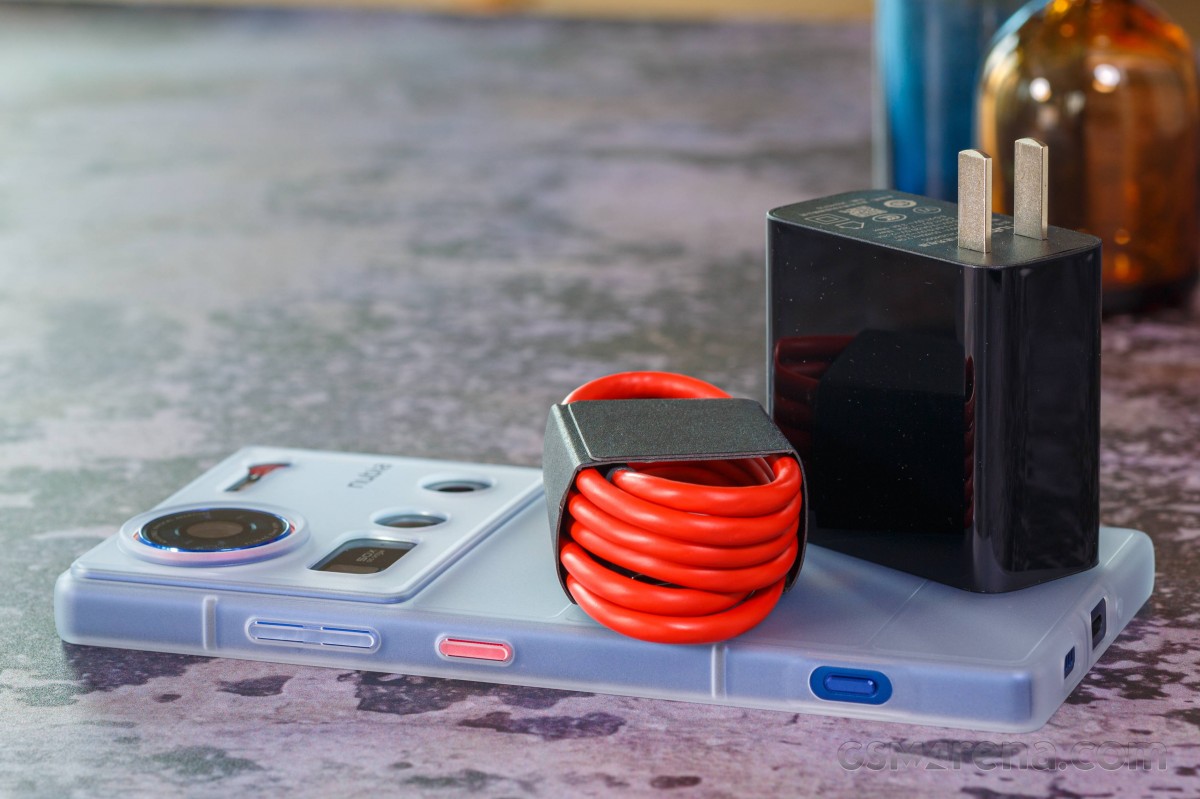
It's nothing fancy, but also not entirely barebones. You'd get an 80W Power Delivery-compliant charger, together with a nice USB-C cable rated for 9A. A nicer-than-most frosted plastic case is also included, though you may not be fully enthusiastic about covering the handset's back, especially if you get the Starry Night version. More on that on the next page.
Design, build quality, handling
The nubia design team got the broad strokes of the Z Ultra lineup's styling figured out a couple of generations back and the Z70 Ultra closely resembles the Z60 Ultra. Of course though, the shiny Starry Night colorway we have for review will certainly have a very different vibe than the satin black previous model we can compare it to, but if you look past the color, the family ties are certainly there.
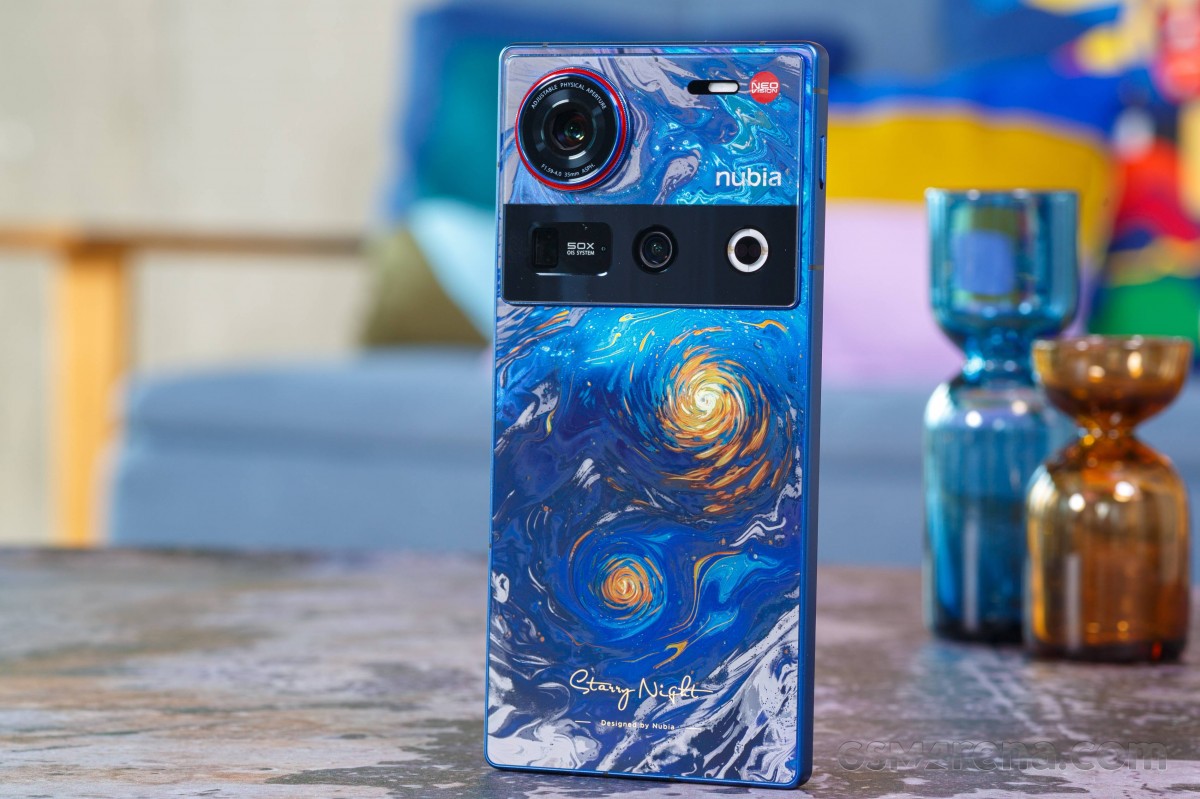
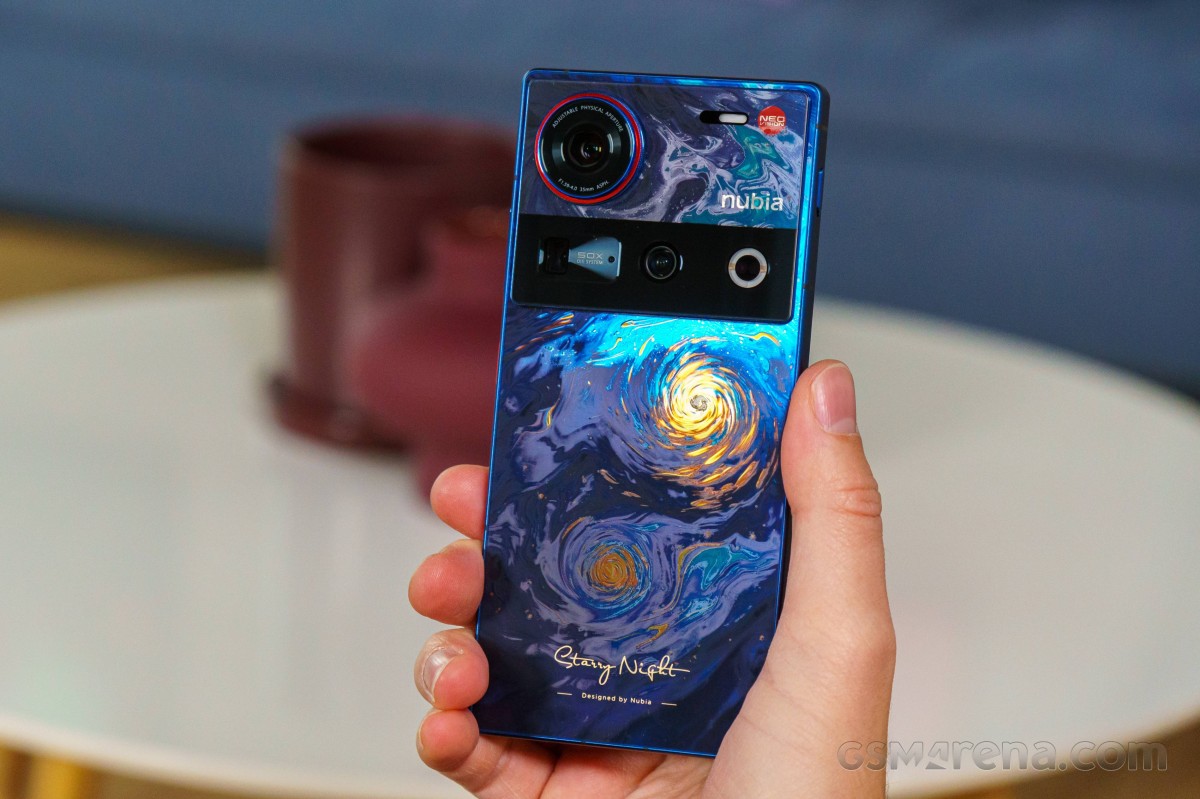
Once you look closer, you'll start spotting the differences. There's been a reshuffling of the camera bits, the red-ringed main unit now relocated to the top left corner. It's so deep (perhaps partially thanks to the new variable aperture bits) that it has a two-step protrusion on top of the already massive camera island.
The telephoto module, on the other hand, has gotten slimmer this generation and no longer needs to stick out anymore, and it's been moved from the right side to the left. The ultrawide has taken center stage, which it doesn't quite deserve, so it doesn't get any unnecessary accents. The flash, styled like a ring, is to the right of this dual camera strip, while the flash-looking thing in the top right corner doesn't appear to serve any purpose.
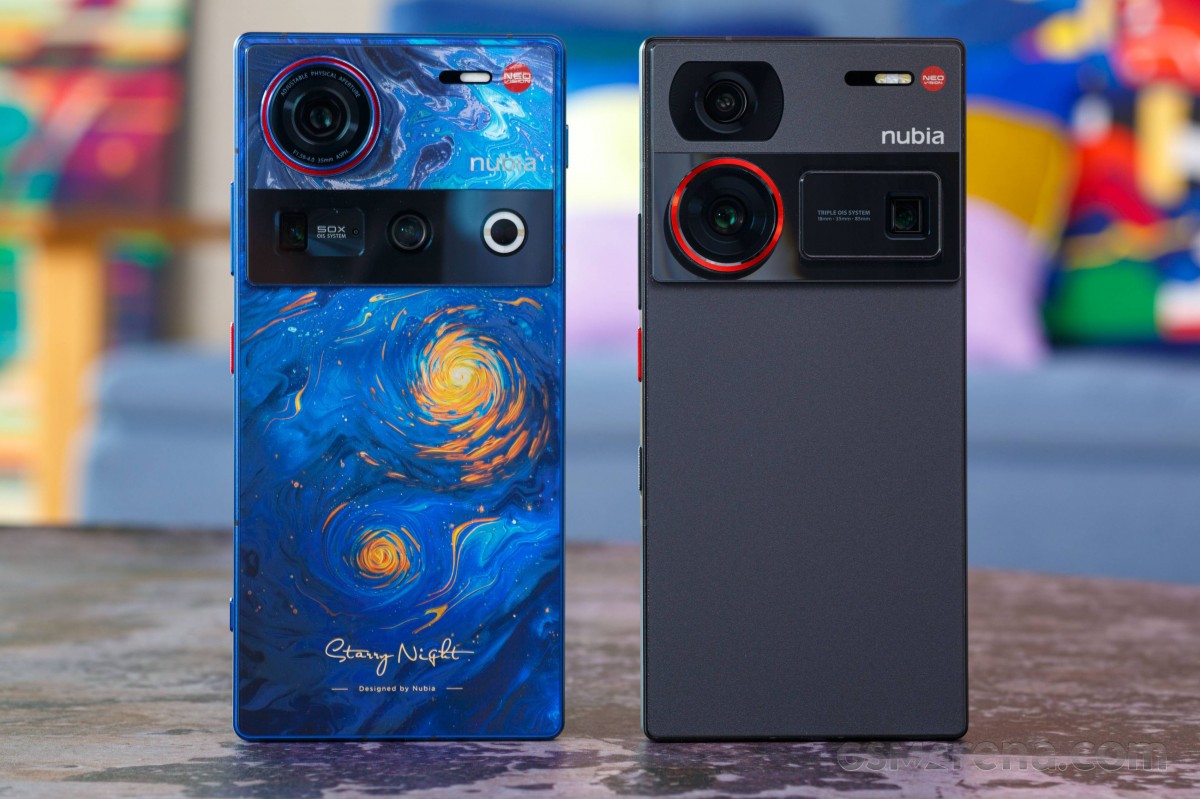 nubia Z70 Ultra (left) next to nubia Z60 Ultra
Now, with the Starry Night version in existence, we'd see little reason for someone to get one of the other two colorways. That said, the fact that this particular livery only comes in a single 16GB/512GB memory configuration might indeed make the other colorways more appealing, one way or another.
Starry Night is an ongoing theme with these nubias, by the way. Both the Z60 Ultra and the Z50 Ultra had a Van Gogh-inspired option, only this one is the most striking - we (or at least some of us) approve.
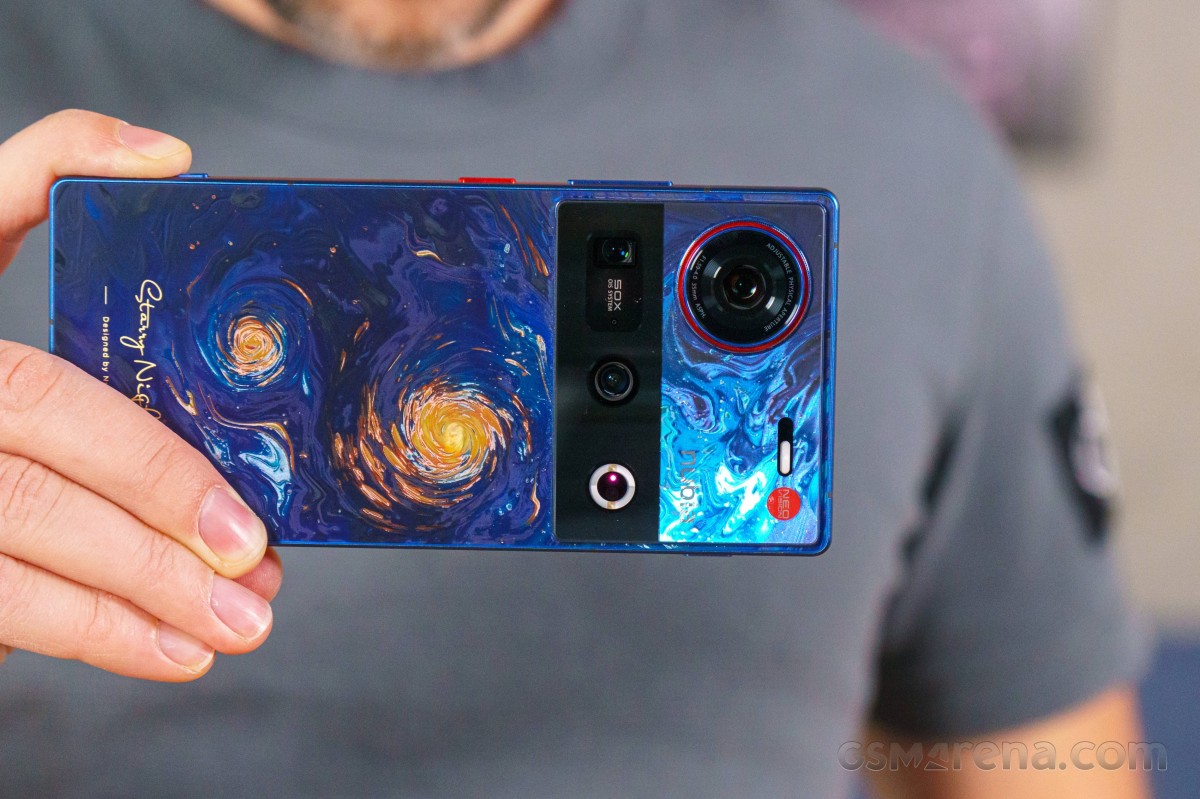
Starry Night, Gold, or Black, the Z70 Ultra features a glass back of unspecified origin. The display, meanwhile, is covered with 2nd-gen Longxi Glass, which is twice as good in drop and scratch resistance as the first iteration, nubia says.
The glass that covers the display has a minute curvature towards the edges, so it's pretty nice to the touch. The bezels around the edges of the screen are also minimal, adding to the premium experience.
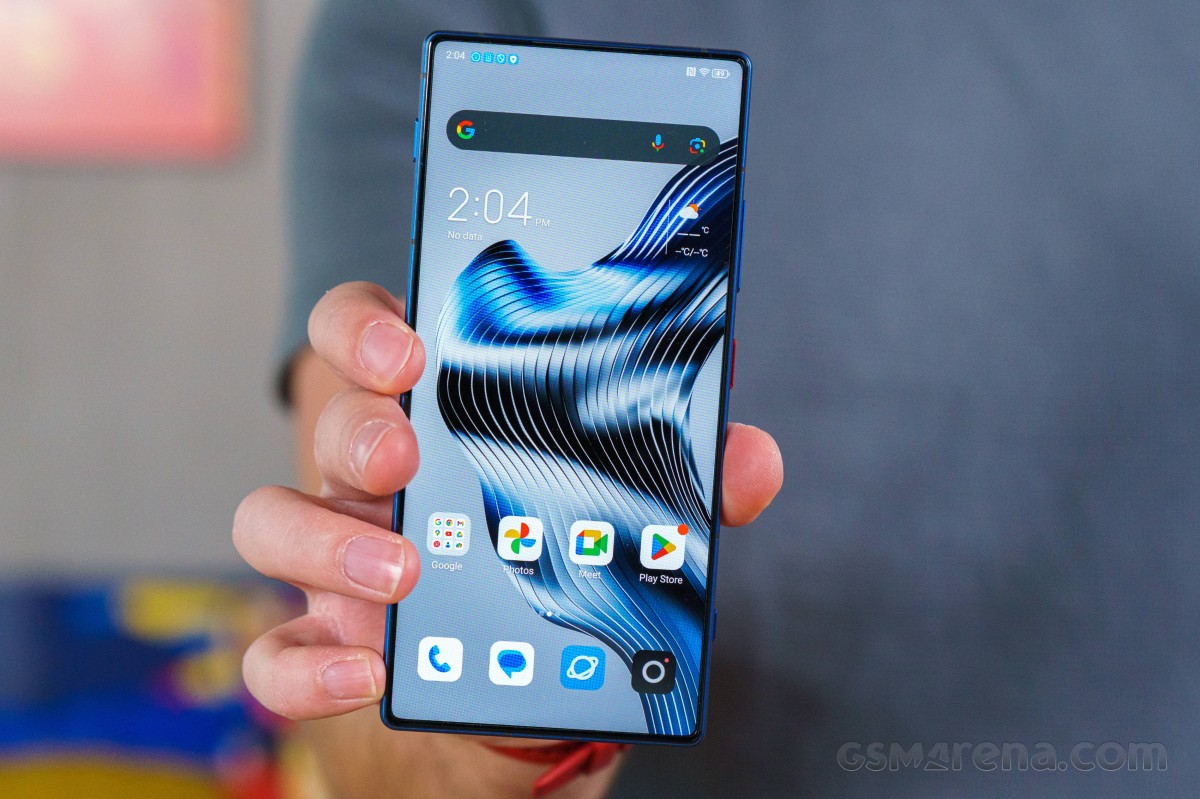
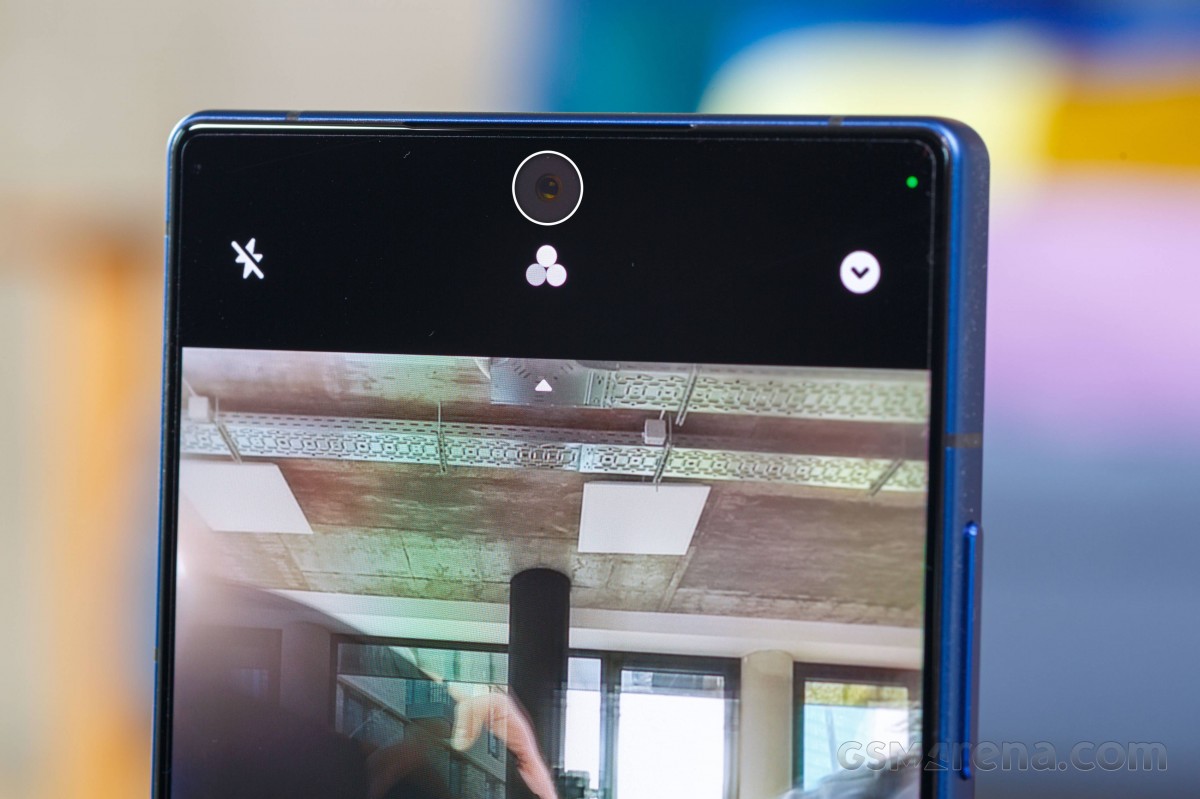
That said, perhaps nothing says 'posh' quite as much as a display with no cutouts and that's one of the Z70 Ultra's highlights. The 7th generation (nubia is counting) of underdisplay selfie camera disappears under (inbetween, really) the OLED pixels when they light up and makes for an undisturbed viewing experience. Sure, we've come to accept punch holes as a necessary evil, and they all but disappear themselves, once your mind adjusts to their presence, but no punch hole is always better.
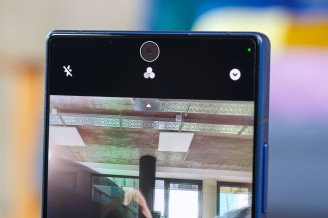
No camera • Camera
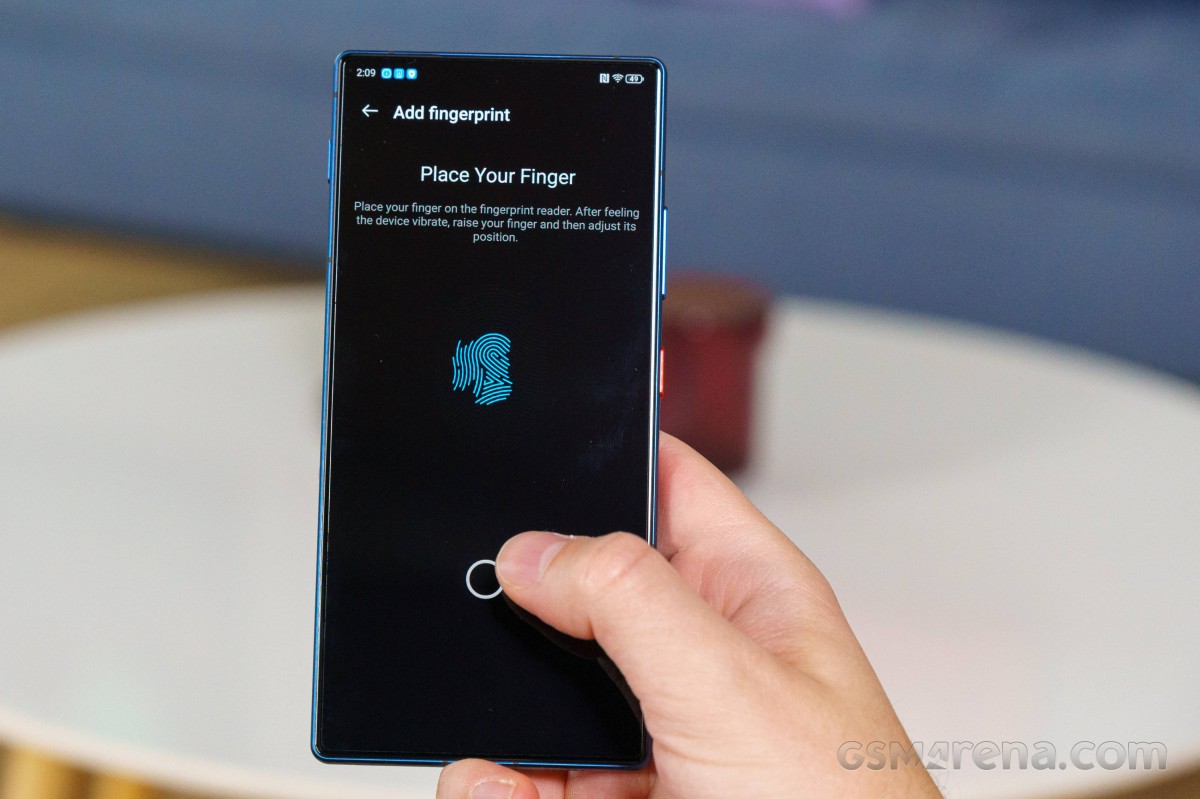
Another thing under the Z70 Ultra's display is the fingerprint reader - that's nowhere as big of a deal. It's the optical variety, so you won't be using it for the Z70 Ultra's underwater camera mode (yes, there's that, too), but it's placed nicely high up and works without issue.
Speaking of water, the Z70 Ultra carries the same IP68/IP69 rating as the other recent high-end phones. In addition to the 1.5m submersion for as long as 30 minutes, the phone has been tested for water jets with a temperature of up to 80 degrees Celsius. One of these days we'll find out what the deal is with this new rating that all these new phones are getting suddenly.
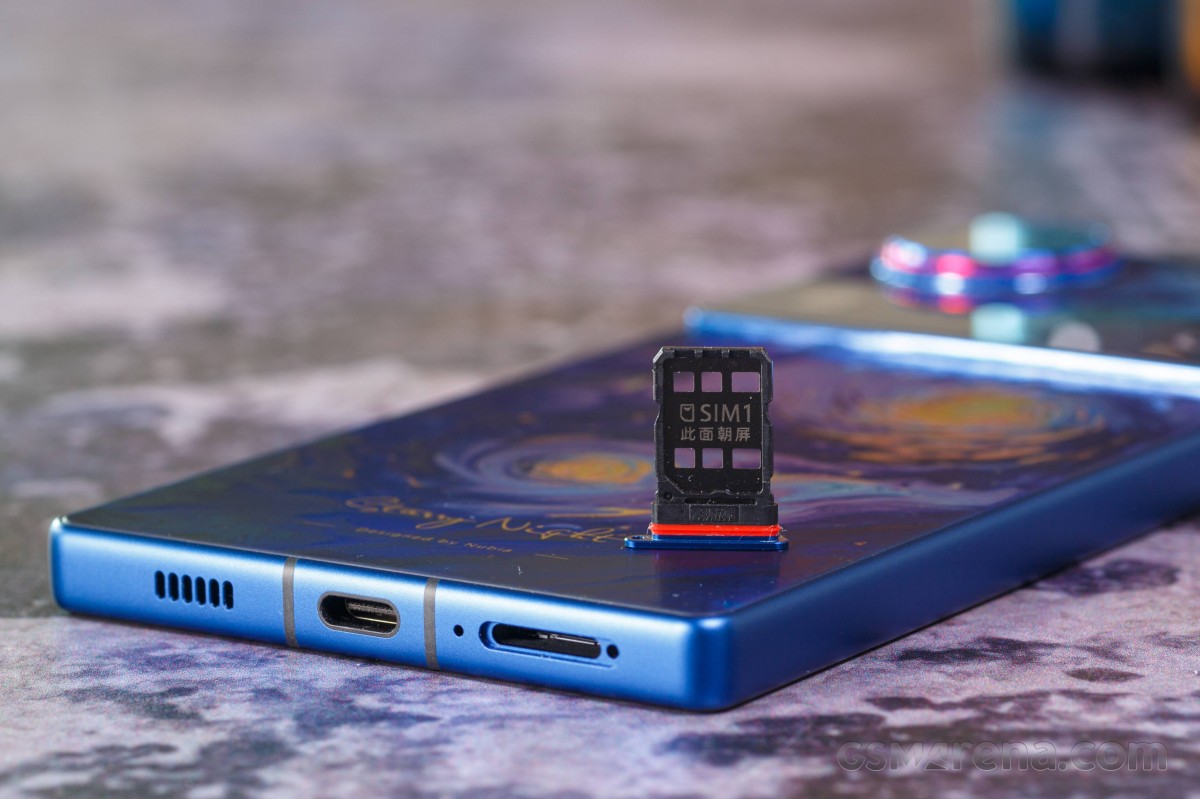 Dual nano SIM slot, but no eSIM option, sadly
Along with the newly-found water resistance, the Z70 Ultra is offering an underwater camera mode. The touchscreen doesn't work underwater so hence the need for alternative controls. That one uses the volume rocker only, so the fact that the fingerprint reader isn't ultrasonic has apparently not affected underwater shooting. The volume up button cycles through modes and the volume down serves for capture action.
That's not the only way you can go about it though. The Z70 Ultra introduces a two-stage shutter release button - right where you'd expect it, on the right side of the aluminum frame, within immediate reach of your index finger. While it is somewhat customizable (you can launch the camera into photo/video/street/pro mode), you couldn't change modes with it while underwater, so the volume rocker operation above is still valid.
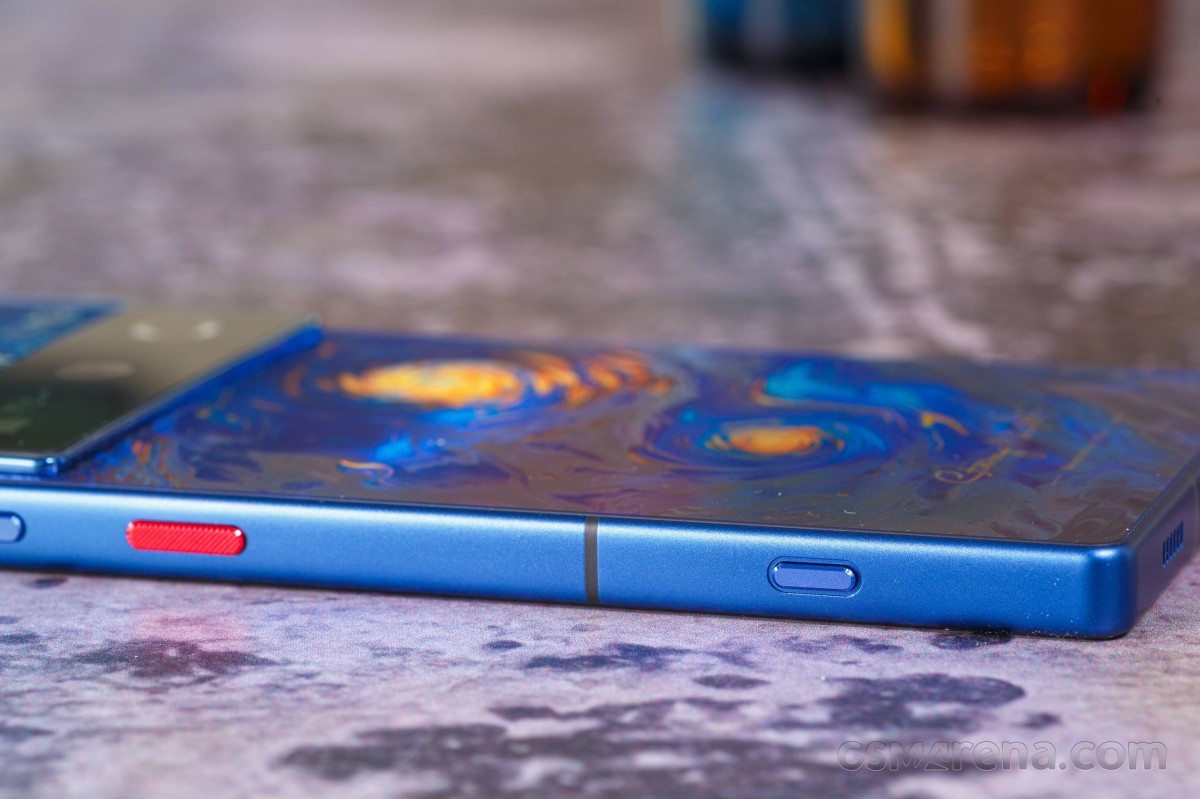
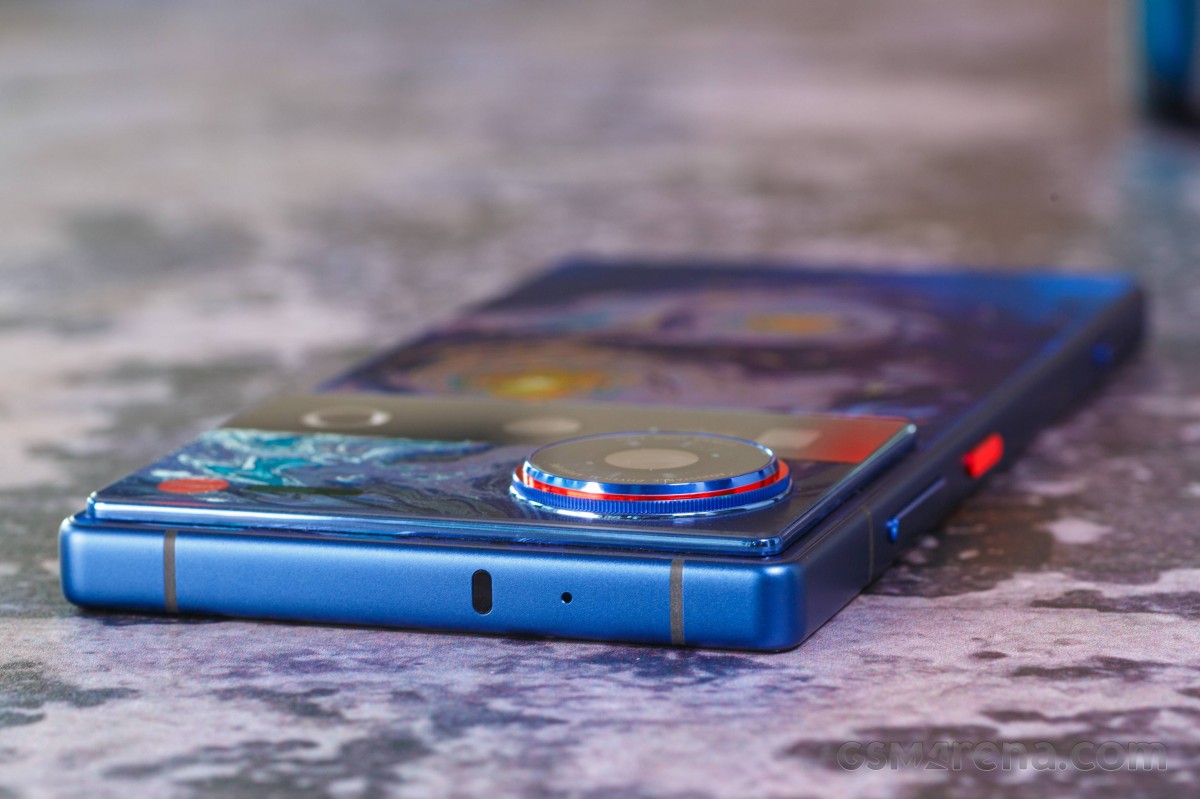
Some of you will probably recall that the Z60 Ultra had a slider control on its right side and that's now gone. As in, gone from the right side - it's been moved to the left. It can still be used as yet another means of launching the camera (in one of three modes), as well as for toggling on and off the flashlight, voice recorder or Game Space utility. It can also be a silent switch.
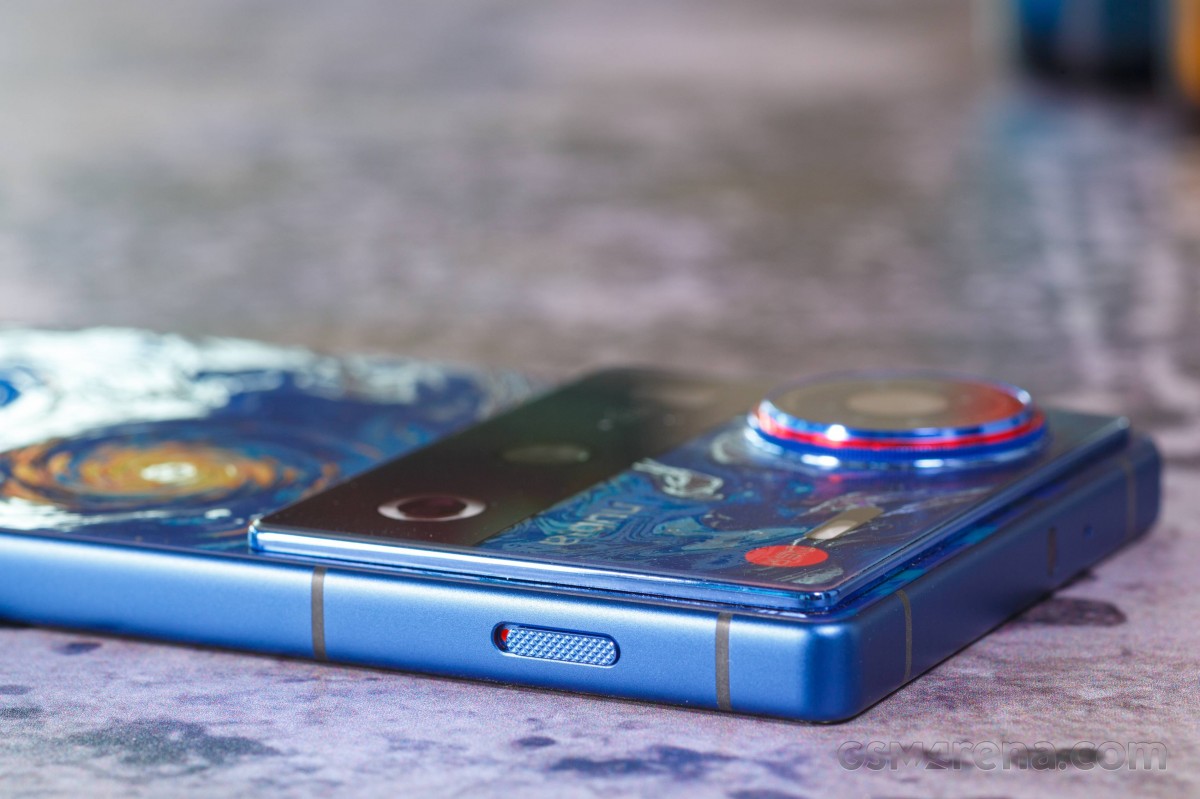
There's an IR emitter on the top of the phone, behind an oval opening. Oddly enough, there was no pre-installed app to work with it, at least on our software build. A quick trip to the Play Store fixed that, though finding a free one without ads might be trickier.
6.85-inch OLED display now reaches 144Hz
The nubia Z70 Ultra gets a new display with a minor increase in diagonal and a bump in maximum refresh rate. The company's ongoing under-display camera efforts mean that in most applications you won't see a punch hole, which isn't all too common of a feat and a pretty welcome sight indeed.
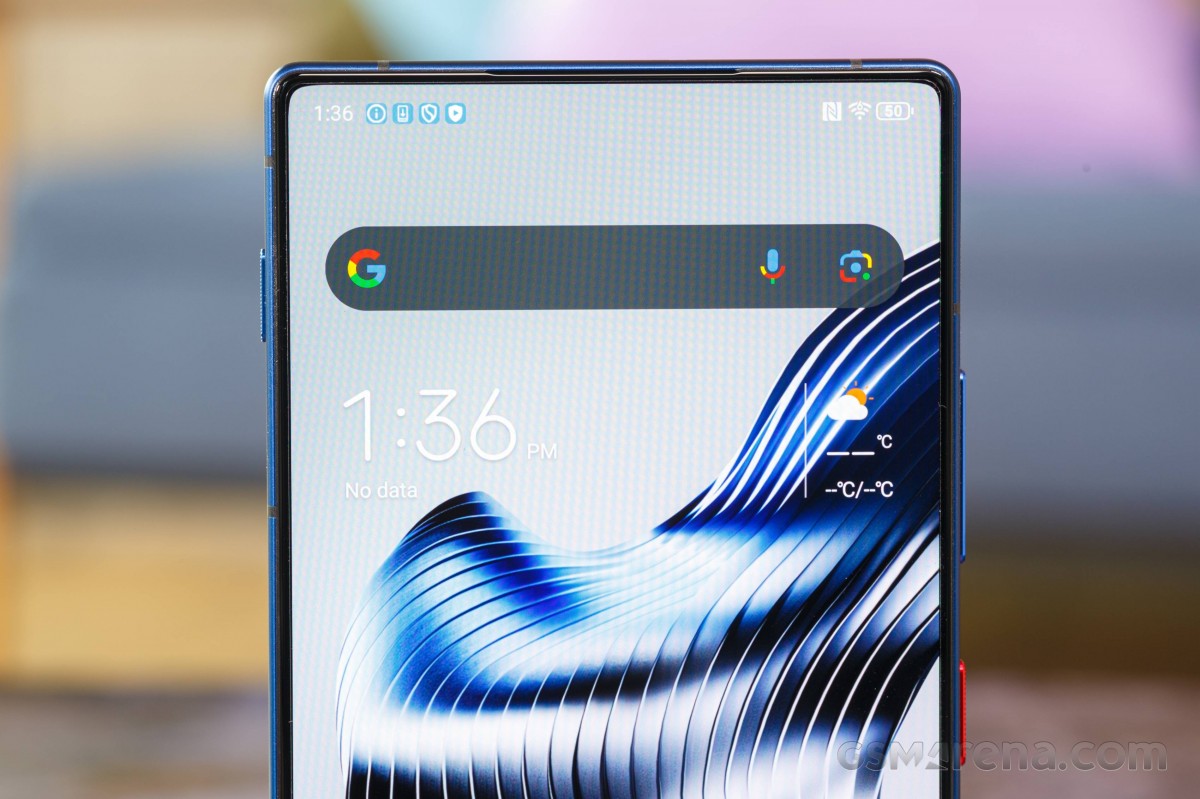
This model's screen has a 6.85-inch diagonal and a 2,688x1,216px resolution in a 19.9:9 aspect, with pixel density working out to 430ppi. The maximum refresh rate is 144Hz, up from the 120Hz of the predecessor. You'll probably note that the specs are the same as those on the recent Red Magic 10 Pro (also a ZTE brand), and we'd be pretty surprised if it's not the exact same panel.
Nubia quotes 2000nits of peak brightness, but as is normally the case, our measurements show a slightly different picture. In our testing, we got a little under 1,400nits in auto brightness mode - not something extraordinary, but a very good result nonetheless. The 618nits we measured in manual operation are alright too - 800-ish nits would have been better, but 600 isn't too bad.
Max display brightness test
White test pattern, 75% fill (nits)
- Manual mode
- Auto mode
 Pixel 9 Pro XL
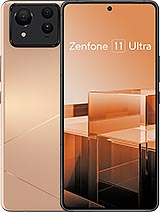 Asus Zenfone 11 Ultra
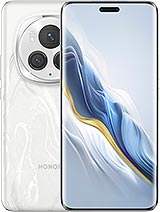 Honor Magic6 Pro
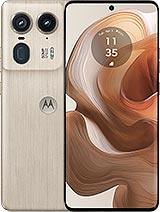 Motorola Edge 50 Ultra
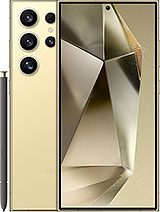 Galaxy S24 Ultra
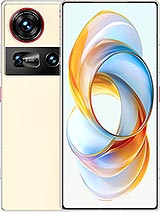 nubia Z70 Ultra
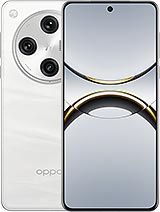 Oppo Find X8 Pro
Refresh rate
The Z70 Ultra may have upped the maximum refresh rate to 144Hz, but its adaptiveness hasn't increased all that much - it still switches between fixed steps (120/90/60Hz) and it doesn't go below 60Hz. Whichever mode you choose, the phone will dial down to 60Hz when idling. The 144Hz is only available in games, which seems fair.
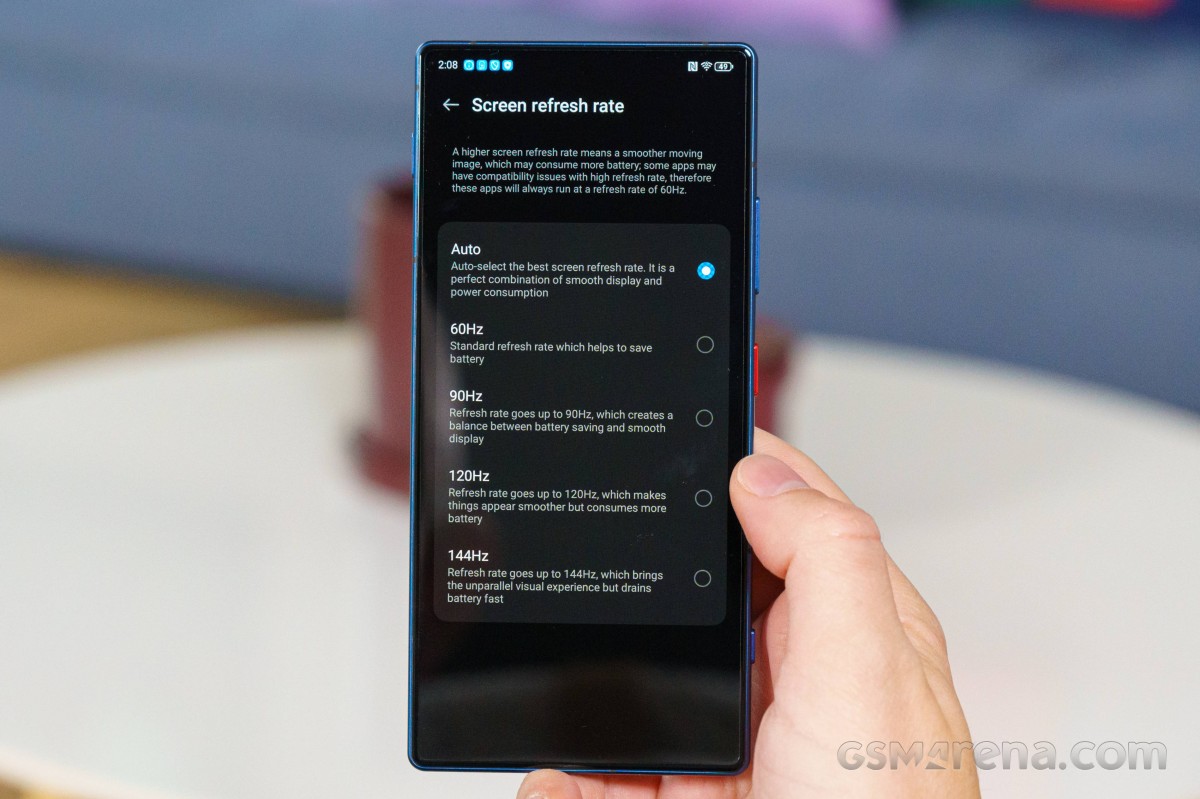
Indeed, the Z70 Ultra appears to very gaming friendly, readily switching to 144Hz for the titles we usually test (both arcade and 3D), and its onscreen overlay reports frame rates above 60fps - we got 144fps in Dead Trigger 2, for example. The Game Space utility is packed with features, too, probably borrowing some features from the Red Magic lineup.
Streaming and HDR
The Z70 Ultra doesn't go wild with HDR support - it only has HDR10, but no HDR10+ or Dolby Vision. It reports Widevine L1 compliance, so you should be able to get FullHD streams of DRM protected content, but the Netlix app recognizes it as L3 and only allows SD streaming (no HDR either). We did get HDR in YouTube, so there's that.
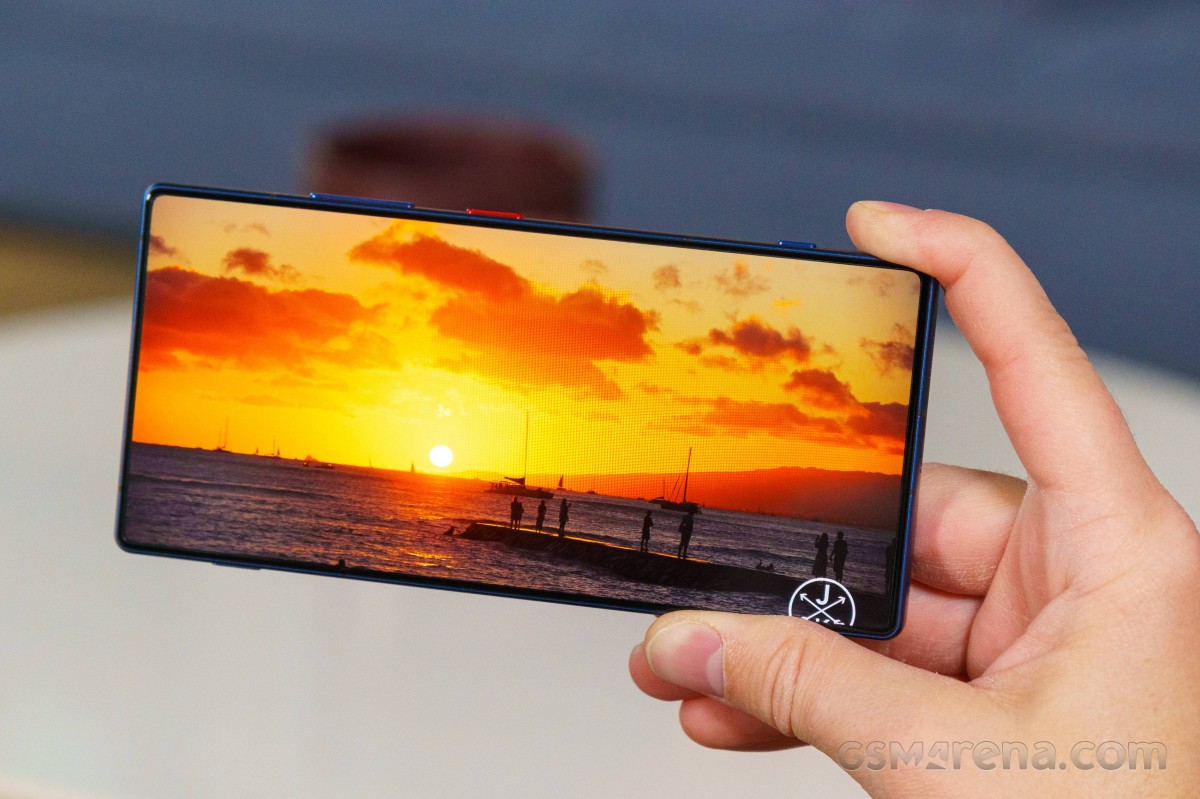
The phone (kind of) supports the Android Ultra HDR standard for displaying HDR photos with enhanced tone mapping and a brightness boost for highlights, though it's a little buggy in its implementation. In our experience, it didn't work in the Google Photos app, which is the default (well, the only) gallery app. In the Google Chrome browser, you'd only get a momentary brightness boost and then the phone would dim down a little. There's some software fine tuning to be done, it seems.
nubia Z70 Ultra battery life
The Z70 Ultra brings a couple of battery changes, one being the switch to a silicon carbon anode cell, the other (possibly related) - a minor increase in capacity to 6,150mAh. We've been seeing batteries push beyond the 6,000mAh mark more and more often, and we have the iQOO 13 at the same capacity as the nubia and the Realme GT 7 Pro at 6,500mAh, while the OnePlus 13, for example, makes do with 6,000mAh.
Well, the Z70 Ultra's Active Use Score would best be described as 'very good'. We clocked a little over 11 hours on our web browsing script, a little over 16 hours of looping videos, and 9 hours flat in the gaming test - not record-breaking numbers, but pretty solid still. The voice call time was below average, driving the overall result down to around 13 hours.
Our new Active Use Score is an estimate of how long the battery will last if you use the device with a mix of all four test activities. You can adjust the calculation based on your usage pattern using the sliders below. You can read about our current battery life testing procedure here. For a comprehensive list of all tested devices so far, head this way.

 ZTE
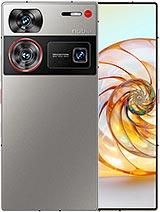
ZTEnubia Z70 Ultra
6150 mAh
 ZTE
ZTEnubia Z60 Ultra
6000 mAh
 Realme
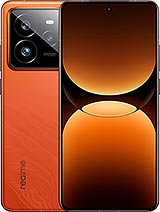
GT 7 Pro
6500 mAh
Charging speed
The Z70 Ultra supports charging at up to 80W and that's also what it says on the adapter that ships with the phone. In our testing, we got as much as 62W on our power meter, which is a bit lower than expected, though the phone did maintain that level for more than just a fleeting moment.
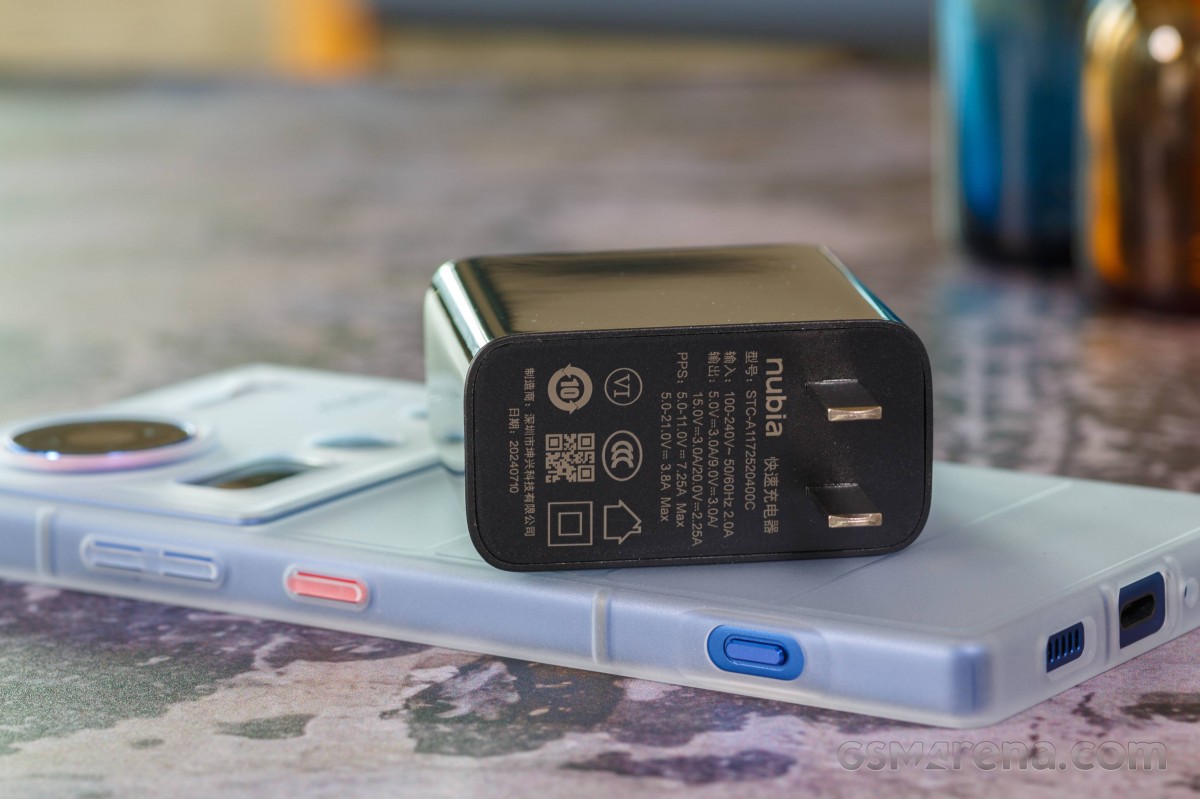
We clocked an empty-to-full time of 42 minutes on the Z70 Ultra, a few minutes faster than the Z60 Ultra's result. The first 30 minutes got us to 84% - again, a little better than the old model. Compared to potential rivals, the Z70 Ultra is better than average.
That said, the Z60 Ultra did charge faster at the time of the initial review, only to drop its speed to the numbers shown in the chart a few months down the line. The point being that the Z70 Ultra might also get a different charging curve with a later update.
Charging speed
- in 15 min
- in 30 min
- Time to full charge (from 0%)
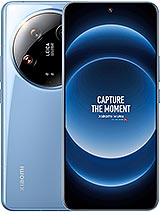 Xiaomi 14 UltraRealme GT 7 ProAsus Zenfone 11 Ultranubia Z70 UltraHonor Magic6 ProGalaxy S24 UltraPixel 9 Pro XL
There's no wireless charging capability on the Z70 Ultra. It's not a given in its market segment, but more and more phones have it now and it would have been a welcome addition to the lineup - a missed opportunity.
The phone has a Charge separation feature - it can be set to only draw power directly from the adapter to meet its current needs, bypassing the battery. That way you can avoid unnecessary heat build-up when gaming, for example.
That same feature can be used to sort of ensure that the phone's battery doesn't charge beyond a certain percentage, potentially helping with the cell's long-term health. You can set the stepless slider to, say, 82%, and the phone will charge the battery to that level and then proceed to only draw as much power as it needs for its current activities. The range of that slider is plenty wide too - 20% to 90%.
Speaker test
The nubia's speaker system is a fairly classic hybrid arrangement with one bottom-firing unit and another one above the display that's also an earpiece. The phone maintains strict channel separation (unlike others that send the opposite channel's track to each speaker at a lower level) and will adjust the channels based on its orientation in space.
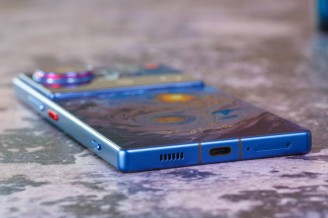
Bottom speaker • Top speaker/earpiece
In our testing, the Z70 Ultra earned a 'Very Good' rating for loudness - roughly on par with its competition. While the integrated loudness is higher on the old model, the new one shows significantly improved sound quality. Sound has more depth now, there's a decent amount of bass and the mids have been toned down so they don't dominate as much.
 ZTE
ZTEnubia Z70 Ultra-25.9 LUFSVery goodloudness score
ZTEnubia Z60 Ultra-23.6 LUFSVery goodloudness score❌︎
RealmeGT 7 Pro-25.3 LUFSVery goodloudness score❌︎
Use the Playback controls to listen to the phone sample recordings (best use headphones). We measure the average loudness of the speakers in LUFS. A lower absolute value means a louder sound. A look at the frequency response chart will tell you how far off the ideal "0db" flat line is the reproduction of the bass, treble, and mid frequencies. You can add more phones to compare how they differ. The scores and ratings are not comparable with our older loudspeaker test.
MyOS has turned into Nebula AIOS, Android 15 underneath
The nubia Z70 Ultra comes with a newly rebranded in-house software layer, dubbed Nebula AIOS - the MyOS of yesteryear is no more. It's not a radical change, of course - if anything, there's even less than the usual amount of small stylistic changes in the iconography or whatnot, compared to the Z60 Ultra. The Android 15 core below the Nebula is new, that's for sure.
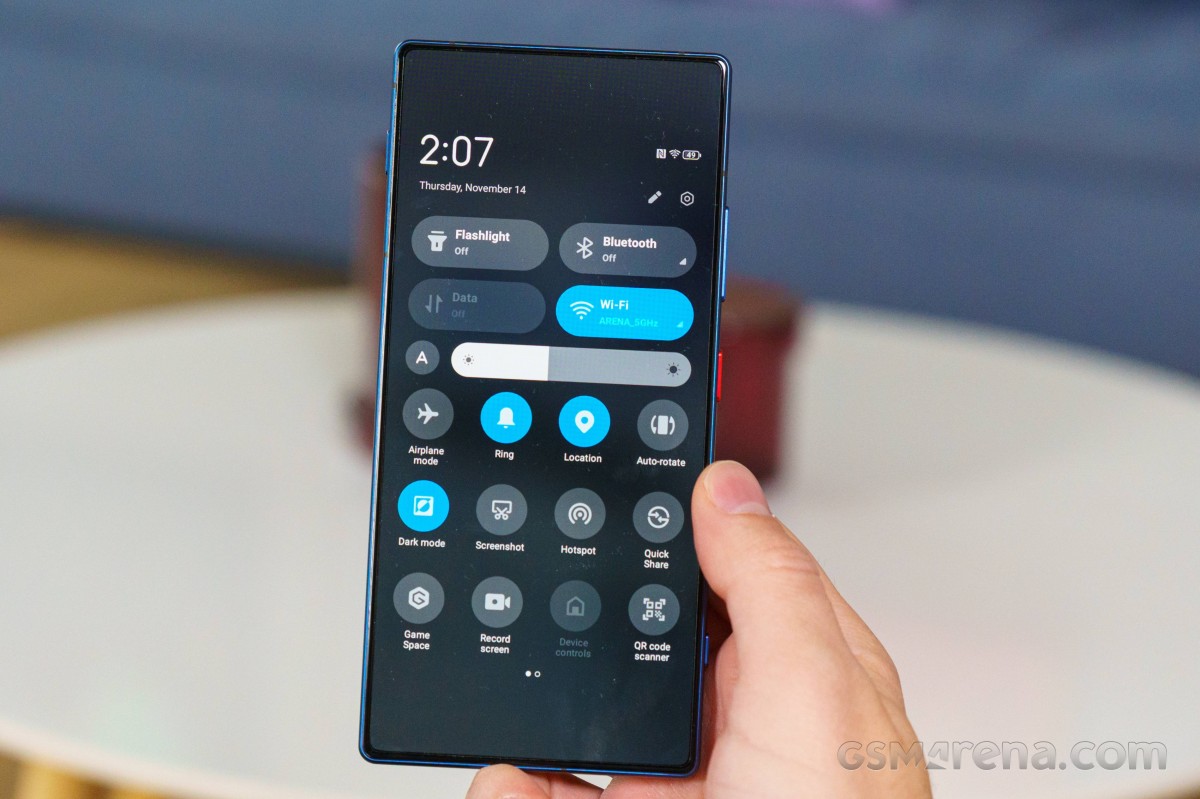
We looked for some groundbreaking Nebula bits, but either they're well hidden, or there aren't all that many. That said, labeling this or that feature that's been around for a few years with an 'AI' badge is somewhat getting on our nerves, so you could say that the Nebula AI's lack of prominent AI features is a breath of fresh air.
There's a new AI Translate feature - that much we gathered. It's provided by ZTE and will translate voice calls in real-time, whether with voice or subtitles. The supported languages include Simplified and Traditional Chinese, two flavors each of Spanish and English, Russian, German, Italian, French, Portugues, Japanese, Thai, and Korean.
There's also Google Gemini on board, of course.

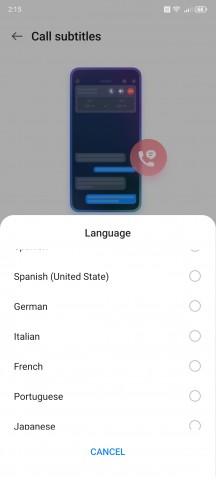
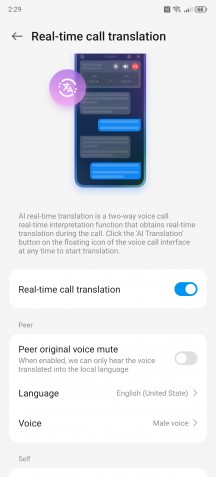
AI Translate
Other than that, Nebula is just like My. The characteristic quick toggles area, where the initial swipe would get you 4 large bubbles for Bluetooth, mobile data, flashlight, and now Wallet, has been a staple of nubia/ZTE/Red Magic for a couple of years.
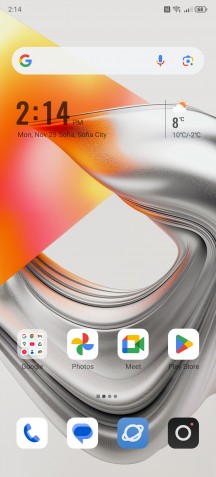
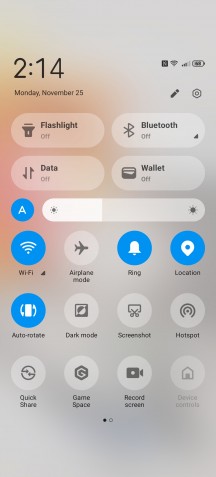
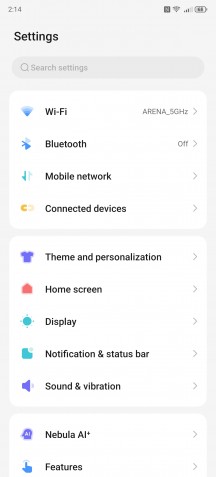
Nebula AIOS on the nubia Z70 Ultra
Another one of those long-standing features for phones from these brands is the Game Space utility - just because the nubia doesn't rock the full-on gaming phone aesthetic, doesn't mean it can't be one in disguise. A bit cluttered and overwhelming at first sight, Game Space consists of two large symmetrical menus on each side of the display, with most of the functions readily accessible with a single tap. You can monitor your CPU and GPU frequency as well as, crucially, in-game fps using an overlay.
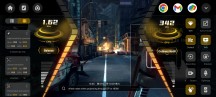
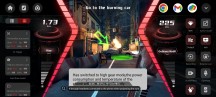

Game Space
Performance and benchmarks
The nubia Z70 Ultra relies on the Snapdragon 8 Elite for its computing needs. We've been getting phones with Qualcomm's latest inside in droves over the past few weeks, and we've already reviewed a handful and know more or less what to expect from the Elite. That's top-tier performance, and the nubia delivers it too.
The all-new custom CPU cores in the Snapdragon returned excellent numbers in the Z70 Ultra's implementation, both in single-core and multi-core GeekBench.
GeekBench 6
- Multi-core
- Single-core
 ROG Phone 9/9 Pronubia Z70 UltraRealme GT 7 ProOppo Find X8 Pro
 vivo X200 Pronubia Z60 UltraZenfone 11 Ultra
The Antutu results are also in the ballpark we'd expect from the Elite, which is more or less what the competing Dimensity 9400 puts out too. By the way, our nubia is the 16GB/512GB version, and its storage speed corresponds to the UFS 4.0 spec. Also in existence are three other versions - 12GB/256GB, 16GB/1TB and 24GB/1TB - though probably not all of them will be seen outside of China. Either way, 16GB/512GB sounds perfectly alright.
AnTuTu 10
ROG Phone 9/9 Provivo X200 ProRealme GT 7 Pronubia Z70 UltraOppo Find X8 ProZenfone 11 Ultra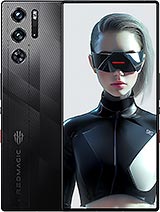 Red Magic 9S Pro
In the GPU department, the nubia's Adreno 830 is behind the Immortalis GPU of the latest top-end Dimensity, but as Adrenos go, this one is pretty quick. The GT 7 Pro did score higher in graphics benchmarks, but if the Z70 Ultra can match the ROG Phone 9, there's not a lot to complain about here.
3DMark
- Wild Life Extreme (2160p)
- Solar Bay (1440p)
vivo X200 ProOppo Find X8 ProRealme GT 7 ProROG Phone 9/9 Pronubia Z70 UltraRed Magic 9S Pro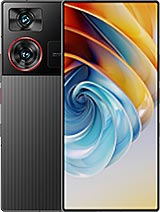 nubia Z60 Ultra Leading Edition
Things get a little more unusual in the stress tests. The Z70 Ultra's CPU experience a sharp drop in performance less than two minutes into the CPU Throttling test, hovered around 65% of its initial result for about 5 minutes and them proceeded to drop to around half of its starting performance. Not ideal.
In the Wild Life Extreme stress test, on the other hand, the nubia recorded an 85% stability rating, one of the highest we've seen from a phone without active cooling. Now, admittedly that was at the expense of very high operating temperatures - the Z70 Ultra's 55 degrees reported at the end of the test are at least 5 more than what we're used to seeing. It was pretty hot to the touch, yes, but not unbearably so. That should count as a win.
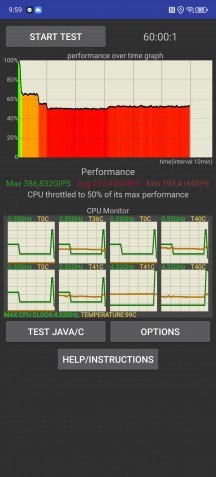
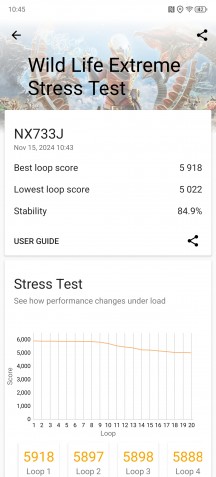
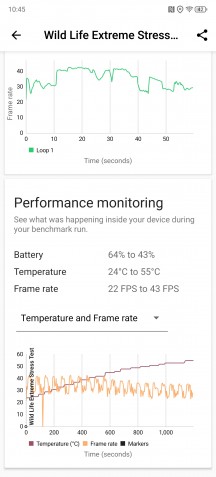
CPU Throttling test • Wild Life Extreme stress test
Vari-aperture 35mm main unit, odd zoom interface choices
The Z70 Ultra continues in the footsteps of previous nubia Zs and ZTE Axons and features a 35mm-equivalent lens on its main camera. The new addition this year is the ability to change its aperture - from the wide open f/1.6 to f/4.0.
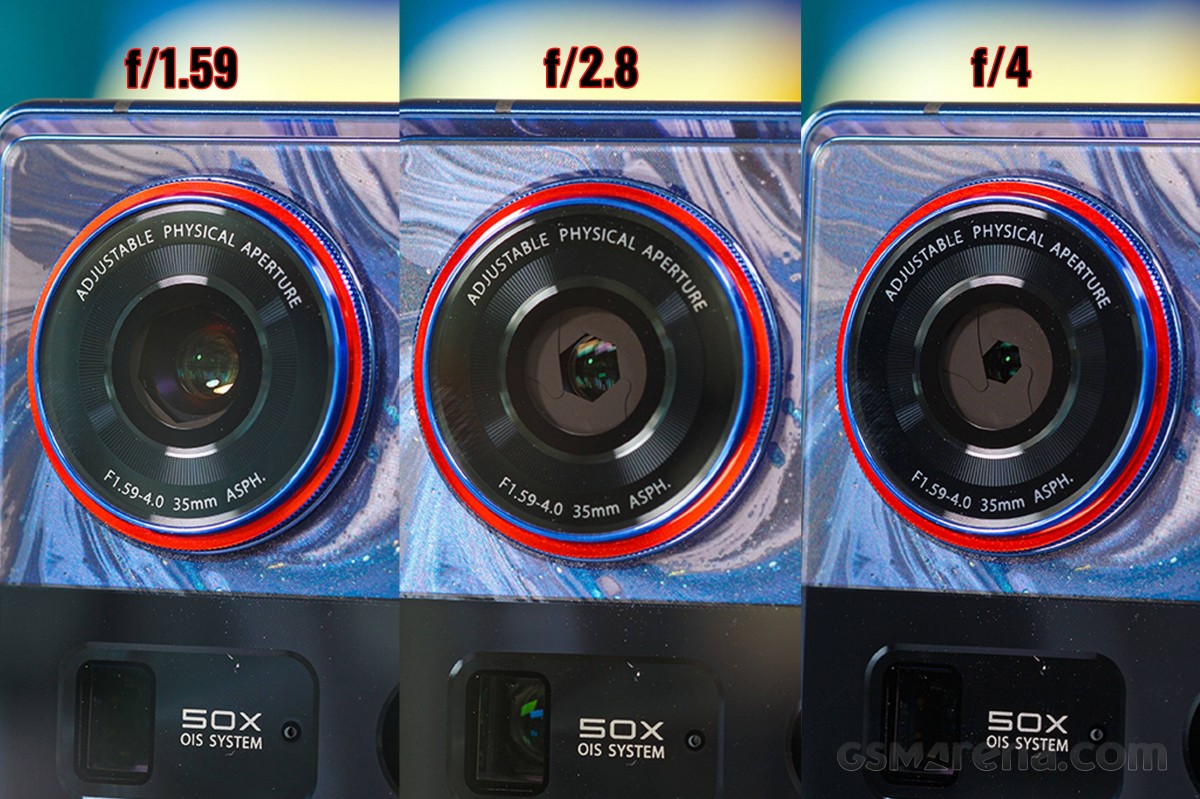
A few more differences await on either end of the zoom range, with some questionable decisions being made on the UI side of things.
Take the telephoto, for example. It's using the same sensor as the one on the Z60 Ultra, but it's mated to a new lens, now with a 70mm equivalent focal length. We like more zoom, not less zoom, but in this particular case the loss of reach isn't that big, while the gain in close-focusing capability is a lot more noticeable, and most welcome.
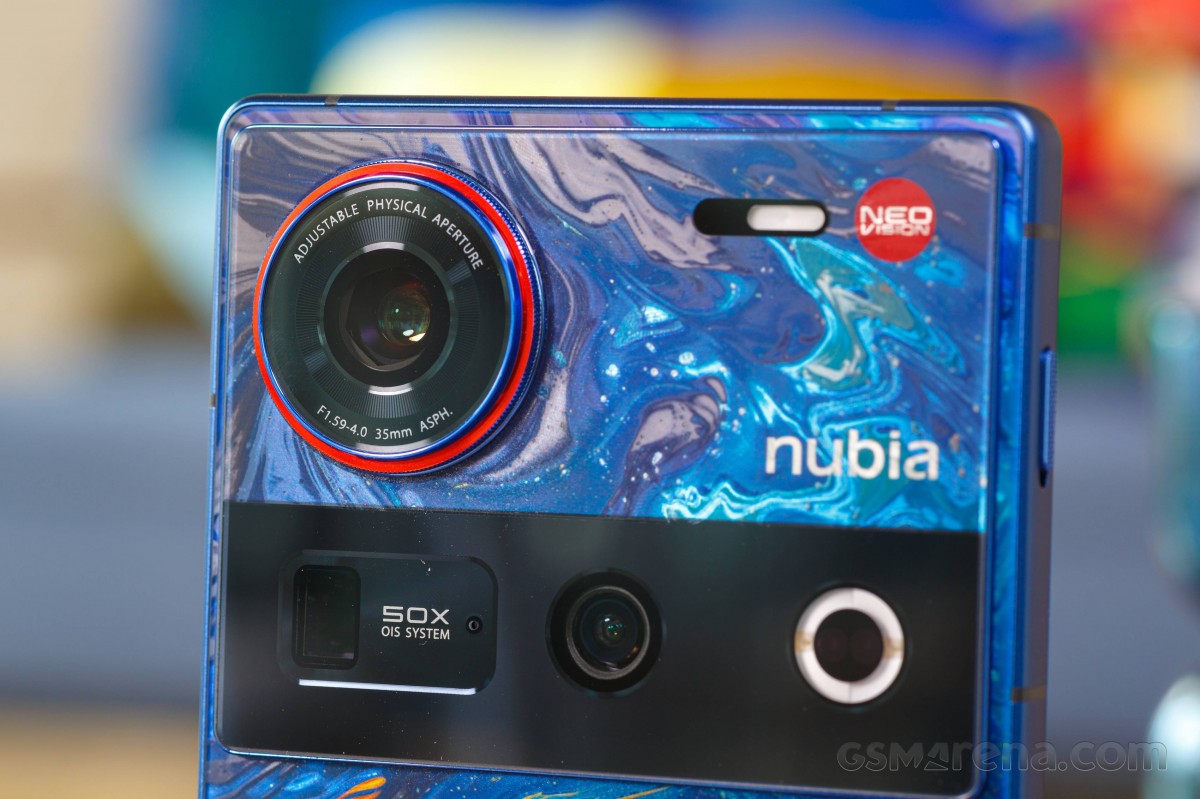
The thing is though, the camera viewfinder still has the same 18-35-85mm buttons for zoom that the Z60 Ultra had and to get to the Z70 Ultra's native 70mm, you need to tap once on the 85mm to switch to the telephoto, once more to get to 140mm, and then a third time for the 70mm.
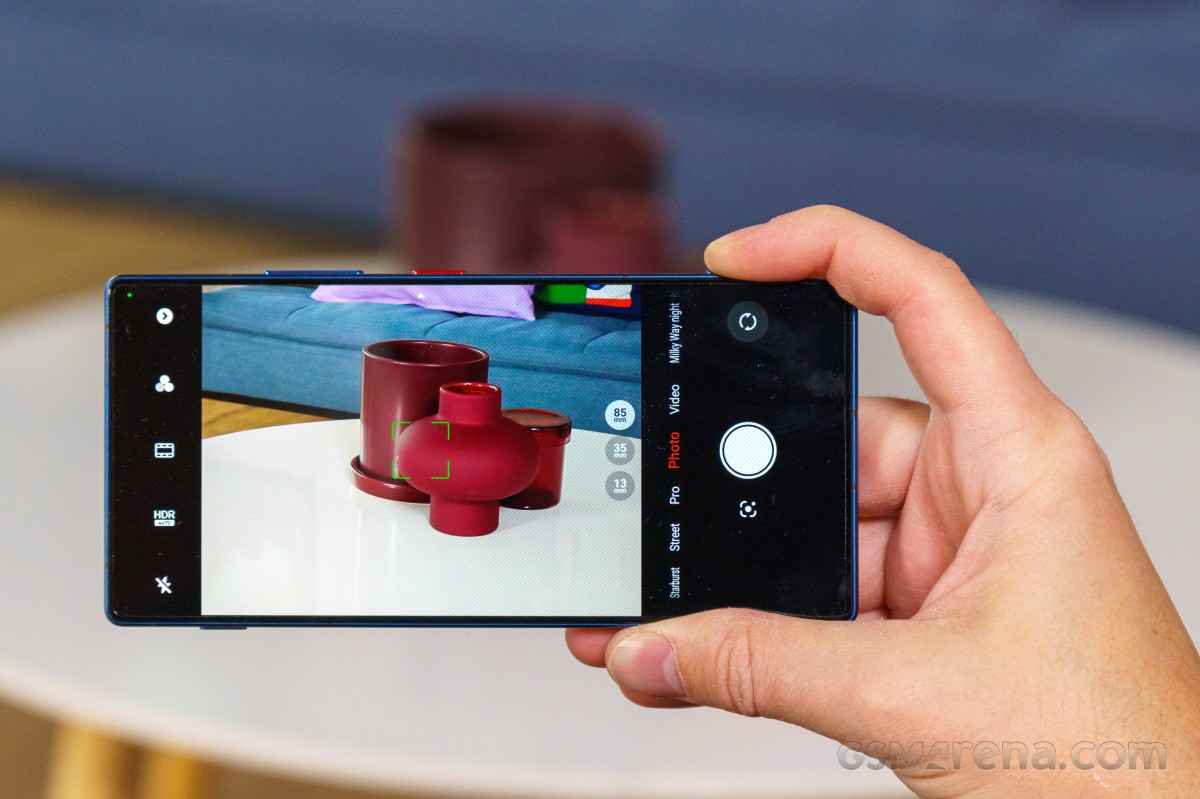
It's a similar story with the ultrawide, which is now a lot wider than before, at 13mm. But the 13mm is only accessible by cycling the modes - so 18-24-13mm. Of course, pinch to zoom is always an option, but we feel like the button operation is a bit of a mess. Also, the ultrawide's extra coverage now comes at the expense of sensor size - the 1/1.55" unit of the Z60 Ultra has been replaced with a 1/2.88" one.
Under-display cameras are a big deal on nubia phones (and their relatives from the Axon and Red Magic lineups) and this one is the 7th iteration, now also leveraging generative AI to make up for the loss of pixels that it needs to share with the display.
- Standard (main): 50MP Sony IMX 906 (1/1.56", 1.0µm-2.0µm), f/1.6-f/4.0, 35mm, multi-directional PDAF, OIS; 4K@120fps/8K@30fps
- Telephoto: 64MP OmniVision OV64B (1/2.0", 0.7µm-1.4µm), f/2.4, 70mm, multi-directional PDAF, OIS; 4K@120fps
- Ultrawide: 50MP OmniVision OV50D (1/2.88", 0.61µm-1.22µm), f/2.0, 13mm, multi-directional PDAF; 4K@60fps
- Front camera: 16MP OmniVision OV16E (1/2.8", 1.12µm), f/2.45, 24mm, fixed focus; FullHD@30fps
There's the company's usual Street mode that can be activated with the slider on the left side of the phone or form the viewfinder mode switcher. It shows exposure parameters, has a manual focus capability and a few more preset zoom levels (but still no 13mm or 70mm either).
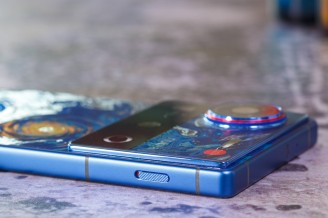
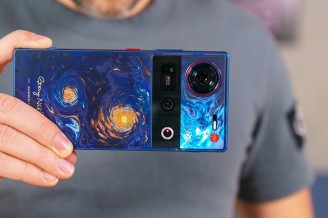
Slider has been moved to the left • Shutter release on the right
The slider has been relocated for this generation to allow more room on the right side of the phone, where a shutter release button has appeared. It's a tiny two stage mechanical button (unlike the Oppo Find X8 Pro's pressure-sensitive solution) that can also be used as a shortcut to launch the camera. More is often better, particularly when it comes to shortcuts and control options, it's just that we're not entirely sure smartphone cameras need dedicated physical buttons.
There's also an underwater mode that lets you cycle modes using the volume up button and use the volume down for capture. The modes that being cycled are Photo, Video, and Street - in case you're underwater on the street.
Daylight photo quality
Main camera
The Z70 Ultra's main camera captures good photos during the day, but they don't necessarily impress. We're seeing a relatively digital detail rendition - not that film is what we're after, it's just that textures don't look particularly organic. There's also some grain mixed, itself not an issue just an observation. The Z60 Ultra as we remember it took cleaner and more natural looking photos. Dynamic range is reasonably wide, and we do like the colors in these shots.
















Daylight samples, main camera (35mm)
The phone would always appear to shoot at f/1.6 in our test scenes if left in full auto mode. Changing the aperture is only possible in Pro mode and in our minds stopping down makes sense if you're shooting from up close and need some more depth of field, which is otherwise pretty thin. The DoF standpoint aside, we don't think that stopping down brings a meaningful improvement in sharpness.










Daylight samples, main camera (35mm): f/1.6 • f/2.0 • f/2.8 • f/4.0
People shots at 35mm are pretty good. The shooting distance is nice and comfortable, facial proportions don't suffer from distortions, there's a good level of background separation. Skin tones are also quite appealing. Weirdly enough, Portrait mode can have ever so slightly more natural facial detail rendition - and that's with all beautification turned off in both modes.




Daylight samples, main camera (35mm), Photo mode




Daylight samples, main camera (35mm), Portrait mode
The full-res 50MP samples look like upscaled versions of the regular ones - no point in using this mode.




Daylight samples, main camera (35mm), 50MP
The 50mm zoom level produces images that are a little too soft for our liking, plus it more readily exposes the other flaws like the grain and false color artifacts.








Daylight samples, main camera (2x)
Telephoto camera
Tap on the 85mm button in the viewfinder and you'll get an ever so slightly zoomed in view from the telephoto camera. That means that pin-sharp detail may elude you, but it's not too bad - there's still plenty of definition. Colors are generally likeable and dynamic range, while not the widest, is still not an issue.
The fact that you can focus really close with this camera (we measured around 17-ish cm) is perhaps its biggest virtue, and at or around minimum focus distance you can throw backgrounds out of focus and do some nice closeups.
















Daylight samples, telephoto camera (85mm)
The thing is, you stand to gain better detail on a pixel level if you shoot at the native focal length, though getting there is done in a roundabout way, as already mentioned, and you may not have the time (or inclination) to do it.










Daylight samples, telephoto camera (70mm)
85mm is a classic portrait focal length so it's no wonder that the nubia's photos of people at this zoom level have a nice perspective and facial features look well proportioned. You also get an 85mm zoom level in Portrait mode, but it's only in Photo mode where you can shoot at 70mm - you can't have the native focal length together with the extra bokeh.




Daylight samples, telephoto camera (85mm), Photo mode




Daylight samples, telephoto camera (70mm), Photo mode




Daylight samples, telephoto camera (85mm), Portrait mode
There's an extra level of weirdness in the full-res samples. They had the field of view of the 70mm focal length at the time of our initial samples hunt, which makes sense, but an update during the review process made things so that you get 64MP 85mm shots for some reason. That is also the case on the ultrawide camera.




Daylight samples, telephoto camera (85mm), 64MP
Since you can't get to 70mm without cycling through 140mm, we shot a few samples at the nubia's longest preset zoom level. Not great, not terrible.
Daylight samples, telephoto camera (140mm)
Ultrawide camera
The ultrawide camera defaults to 18mm, and at that level it's not looking too hot. Sharpness is low, and there's little microcontrast.











Daylight samples, ultrawide camera (18mm)
The native 13mm mode improves things a bit in terms of pixel-level detail, but it's still not amazing. Highlights are a bit too harsh and washed out in some instances. Again, color rendition is quite appealing, though.








Daylight samples, ultrawide camera (13mm)
There's also a 24mm mode which produces shots that are borderline unusable.








Daylight samples, ultrawide camera (24mm)
As was the case with the telephoto, we have samples from the ultrawide camera at full resolution, and those samples have the native 13mm focal length. But by the time we got to writing these lines, a software update has apparently changed the Full size mode's behavior on the ultrawide so that it captures at 18mm. At least it corresponds to the button in the viewfinder.
There's also the added peculiarity that the ultrawide camera saves 12MP shots in Photo mode and 48MP ones in Full size mode - from a nominally 50MP sensor - but that doesn't strike us as all that odd by this point. And with the quality we're getting in this mode, nubia might as well have scrapped it altogether, for all cameras.




Daylight samples, ultrawide camera (13mm), 48MP
Selfies
Selfies from the nubia Z70 Ultra need to be examined with the right attitude and perspective. The best part about this camera is that it leaves your display without an obvious hole in it at all times. Another positive standpoint would be to compare them to the results we got from the Z60 Ultra, whether regular or Leading versions - the Z70 Ultra is a meaningful step up. So while the photos may not be objectively great, they're passable, and we'd say the trade off is well worth it.








Selfie samples
Low-light photo quality
Main camera
The Z70 Ultra's main camera does quite alright at night. We'd point out its tendency to boost yellowish street lights and produce all too warm results in scenes that are dominated by such lighting. But more color and a bit of extra warmth on a winter night sounds like the side to err on. Alternatively, a little slider action in your favorite photo editing software should fix things. Exposures are well judged, dynamic range is excellent and both tonal extremes are developed well. Detail is very good too.










Low-light samples, main camera (35mm)
Telephoto camera
The telephoto's 85mm shots are very good in most ways, even if pixel-level detail suffers a bit from the upscaling shenanigans and some facades aren't as well defined as we'd like. Dynamic range is excellent and colors are a bit more neutral than out of the main camera, though perhaps still a notch over the top.












Low-light samples, telephoto camera (85mm)
The 70mm photos have a minor advantage in definition at 1:1, but in these conditions the difference is perhaps not significant enough.












Low-light samples, telephoto camera (70mm)
At 140mm things are looking pretty sketchy. But if you'll only be showing the photos on the phone or at fit to screen on a PC, they're decent enough.




Low-light samples, telephoto camera (140mm)
Ultrawide camera
The ultrawide handles street lighting and color with a bit more accuracy. Dynamic range is great and exposures are nicely bright. Detail isn't going to be winning any contests, but it's decent given the modest hardware.










Low-light samples, ultrawide camera (13mm)
Video recording
The Z70 Ultra records video at up to 8K30 with its main camera, which is also capable of 4K up to 120fps. The telephoto also maxes out at 4K120, while the ultrawide is capped at 4K60. The underdisplay selfie camera is good for 1080p at 30fps.
The default codec is h.264 and that even works for 8K30 and 4K120, though you can change to h.265, of course. There's an HDR toggle that enables HDR10 capture in 4K30 on the main camera only. Electronic stabilization is optional and is available in all modes except for 4K120 and 8K.
You can check out the playlist below, which includes multiple video samples.
Video quality out of the Z70 Ultra's main camera isn't easily likeable. Detail is gritty and noisy, and you can see that even without specifically looking for it. The strong sharpening doesn't help either. The wide dynamic range and overall pleasing colors are still something, but not nearly enough. The telephoto's footage looks nicer from a pixel-peeping perspective, and it's even okay at 85mm, not just the 70mm native focal length. It's a little shaky though. The ultrawide is fairly good from a quality standpoint, and actually quite great in terms of stabilization. Even the 35mm main camera irons out walking shake competently too.
In low light, the ultrawide and the telephoto are more or less unusable. The main camera does a passable job but is far from greatness.
Competition
With the Z70 Ultra, nubia is iterating on a concept that seemingly no one else is keen to pursue, but that doesn't mean it's without rivals. Powerful high-end phones with a mix of gaming prowess and camera chops that hover a notch below ultimate flagships are plenty. We had a couple of these for review just recently, and another one is due soon, and 2024 is not nearly over yet.
The Realme GT 7 Pro was among the first Snapdragon 8 Elite phones to visit our test bench, and it proved as powerful as you'd expect, and perhaps even more so frugal with its, admittedly quite huge, battery. The Realme doesn't have quite as high cameraphone aspirations, but it does alright in many areas - neither option is flawless across the board, so more careful comparisons are due if the camera is your top priority. The nubia is probably the better bet for gaming.
The Oppo Find X8 looks like another option, geared slightly more towards picture-taking than gaming, possibly being an overall better cameraphone, unless you're after closeups - or, you know, a 35mm camera, but if you're that particular, perhaps you already know which phone you'll get. The Find's Dimensity chip is similarly powerful to the nubia's Elite, and battery life is comparable. The Find does offer an eSIM capability, if you're a globetrotter like that.
We're still expecting the OnePlus 13 around our parts of the world, and if you're not in a rush, you could entertain that possibility as well. On paper, it's more or less the Find X8 with a Snapdragon chip, ultrasonic fingerprint reader, and potentially slightly better endurance.
One distant relative of the above more closely related trio is the iQOO 13, whose global launch is expected later this week. Early indications point to some excellent battery life, and it's got goodies like an ultrasonic fingerprint sensor and a blinky camera surround, though it may be a little underequipped to take on the nubia in a camera battle.
Where's Xiaomi in all this, we hear you asking. Well, perhaps the 15 is a sensible option if you're looking for a capable cameraphone in a smaller package than the boxy Z70 Ultra. Or maybe even the 15 Pro if you are after more cameraphone - provided that it makes it outside of China.
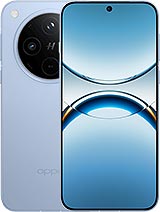
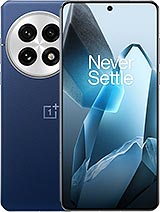
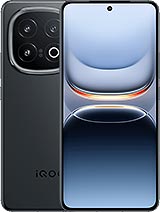
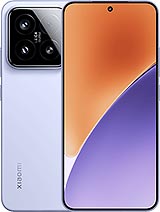
Realme GT 7 Pro • Oppo Find X8 • OnePlus 13 • vivo iQOO 13 • Xiaomi 15
Verdict
With a few generations of 35mm cameras behind its back, the nubia Z70 Ultra remains an intriguing and rare type of cameraphone. It improves on the previous generation by adding a close focusing capability to its telephoto camera but is ultimately led down by interface oddities and suboptimal processing.
Two sides to another coin, the visually pleasing notchless display means less than ideal selfies, though we're a lot more on board with this particular pro-con balance.
A few more compromises can be spotted here or there. Battery may be good enough, but the latest competitors have been setting the bar higher. Missing eSIM support limits the options for cheap data when in roaming, while some display feature omissions make the nubia stand out in a bad way.
On the other hand, a hidden gaming excellence may be able to sway users with... more varied interests. The now-ubiquitous IP68/IP69 is another checkmark in the positives column, and we also appreciate the character that nubia's designers have managed to instill in the lineup when it comes to styling.
Ultimately, the Z70 Ultra is a cameraphone that does not quite live up to its camera aspirations, so we can't recommend getting it without some reservations.
Pros
- IP68/IP69 rating - pressure washing is a go, plus there's an underwater camera mode of sorts.
- Standout design, particularly striking in the Starry Night livery.
- Large and cutout-free OLED display with a 144Hz maximum refresh rate.
- A slider and a camera button - physical controls galore.
- No-frills general UI, wide-ranging gaming capabilities, particularly stable behavior under prolonged GPU load.
- Intriguing camera system; the 35mm main camera is still a key selling point.
Cons
- Battery life not as good as on key competitors.
- Some display shortcomings - limited HDR support, streaming compatibility woes.
- Camera UI gets in the way more than it helps, zoom levels are a mess.
- Video quality is unreliable.
- Selfies are hard to like, though we do appreciate what the UDC brings to the table.
- No eSIM support.


No comments:
Post a Comment