OPPO Find X8 Review
Introduction
Oppo is probably gearing for a large Find X roster this season, with two models already announced and a rumored Find X8 Ultra on the horizon. Today, we have the sidekick to the Pro model - the regular Find X8. It's regular only in name, though, because it's an excellent smartphone with a really balanced spec sheet.
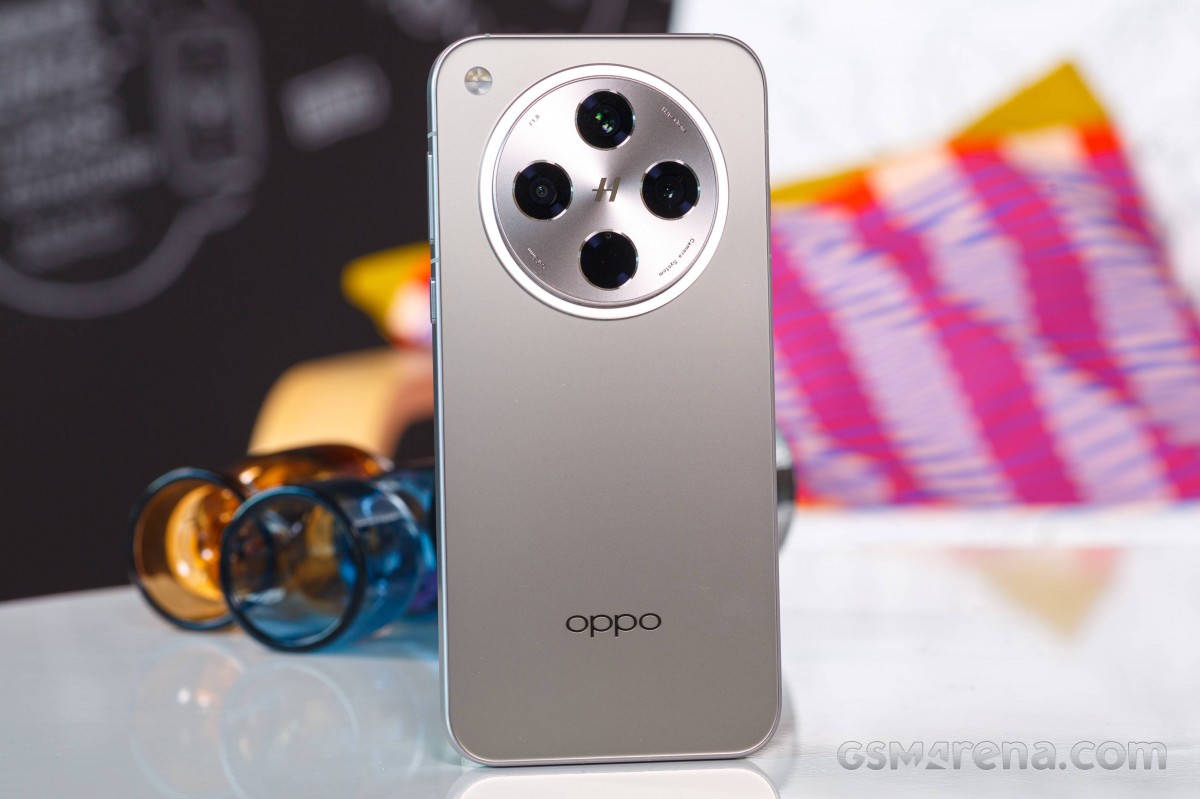
With a 6.59-inch display, the Find X8 is physically smaller than the Find X8 Pro. A smaller body also means a smaller battery - 5,630 mAh. That's still plenty of capacity, and we have the silicon carbon battery chemistry to thank for that. The benefits of the new battery tech also include improved longevity and better behavior in cold conditions.
Then there are the cameras. The regular Find X8 still has a very versatile setup, including a telephoto plus an ultrawide, but the hardware here is less potent than on the Find X8 Pro. Some of the sensors have been downgraded, and probably most crucial of all, the second telephoto from the Pro model is nowhere to be found. The iPhone-inspired camera key is notably absent, too.
Oppo Find X8 specs at a glance:
- Body: 157.4x74.3x7.9mm, 193g; Glass front (Gorilla Glass Victus 2), glass back, aluminum frame; IP68/IP69 dust/water resistant (up to 1.5m for 30 min).
- Display: 6.59" AMOLED, 1B colors, 120Hz, Dolby Vision, HDR10+, 800 nits (typ), 1600 nits (HBM), 4500 nits (peak), 1256x2760px resolution, 19.78:9 aspect ratio, 460ppi; HDR image support.
- Chipset: Mediatek Dimensity 9400 (3 nm): Octa-core (1x3.63 GHz Cortex-X925 & 3x3.3 GHz Cortex-X4 & 4x2.4 GHz Cortex-A720); Immortalis-G925.
- Memory: 256GB 12GB RAM, 256GB 16GB RAM, 512GB 12GB RAM, 512GB 16GB RAM, 1TB 16GB RAM; UFS 4.0.
- OS/Software: Android 15, ColorOS 15.
- Rear camera: Wide (main): 50 MP, f/1.8, 24mm, PDAF, OIS; Telephoto: 50 MP, f/2.6, 73mm, 3x optical zoom, PDAF, OIS; Ultra wide angle: 50 MP, f/2.0, 15mm, 120-degree, PDAF.
- Front camera: 32 MP, f/2.4, 21mm (wide), 1/2.74", 0.8µm.
- Video capture: Rear camera: 4K@30/60fps, 1080p@30/60/240fps; gyro-EIS; HDR, 10-bit video, Dolby Vision; Front camera: 4K@30/60fps, 1080p@30/60fps, gyro-EIS.
- Battery: 5630mAh; 80W wired, PD, PPS, UFCS, 50W wireless.
- Connectivity: 5G; Dual SIM; Wi-Fi 7; BT 5.4, aptX HD, LHDC 5; NFC; Infrared port.
- Misc: Fingerprint reader (under display, optical); stereo speakers.
The Find X8 is still an excellent and very well-rounded device when you look at it on its own. It is excellently crafted with an aluminum frame and hardened glass back and front, plus an impressive IP68/IP69 ingress protection rating. As mentioned, the display is still excellent and utilizes a bright AMOLED panel with a 120Hz refresh rate, Dolby Vision certification, and pretty high resolution.
Perhaps the most impressive bit about the Find X8 is that, just like its Pro sibling, it comes with zero compromises to performance. Sure, the Qualcomm-faithful might not appreciate the choice, but there is no denying that the MediaTek Dimensity 9400 is one beast of a chip. It can also be paired with anywhere between 256GB and 1TB of fast UFS 4.0 storage.
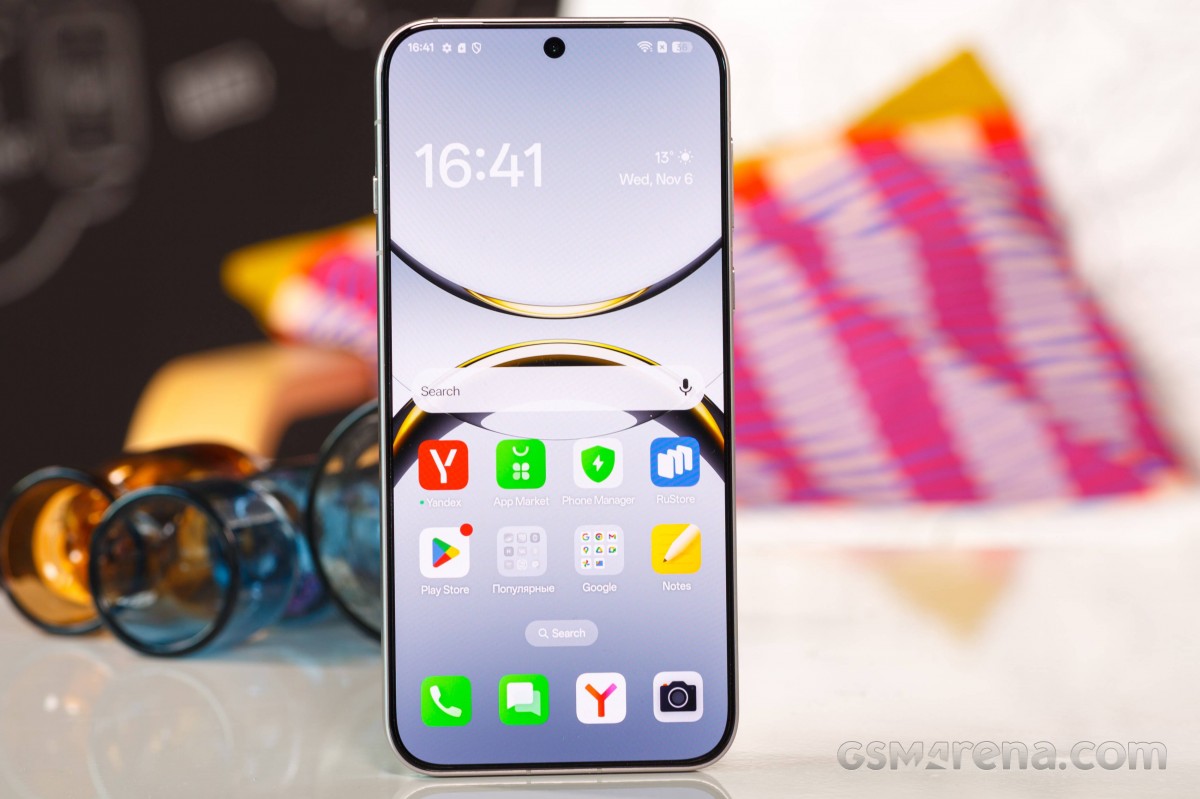
An excellent chipset also entails excellent connectivity, goodies like Wi-Fi 7 support (though only dual-band), Bluetooth 5.4 with advanced audio codecs, and fully-stacked location services. You also get fast 80W wired and 50W wireless charging.
Unboxing
Before we move on, let's take a look at the retail package of the Oppo Find X8. The phone ships in a rather unassuming silver cardboard package with black writing. The material is thick and sturdy, and the phone has a plastic cradle inside.
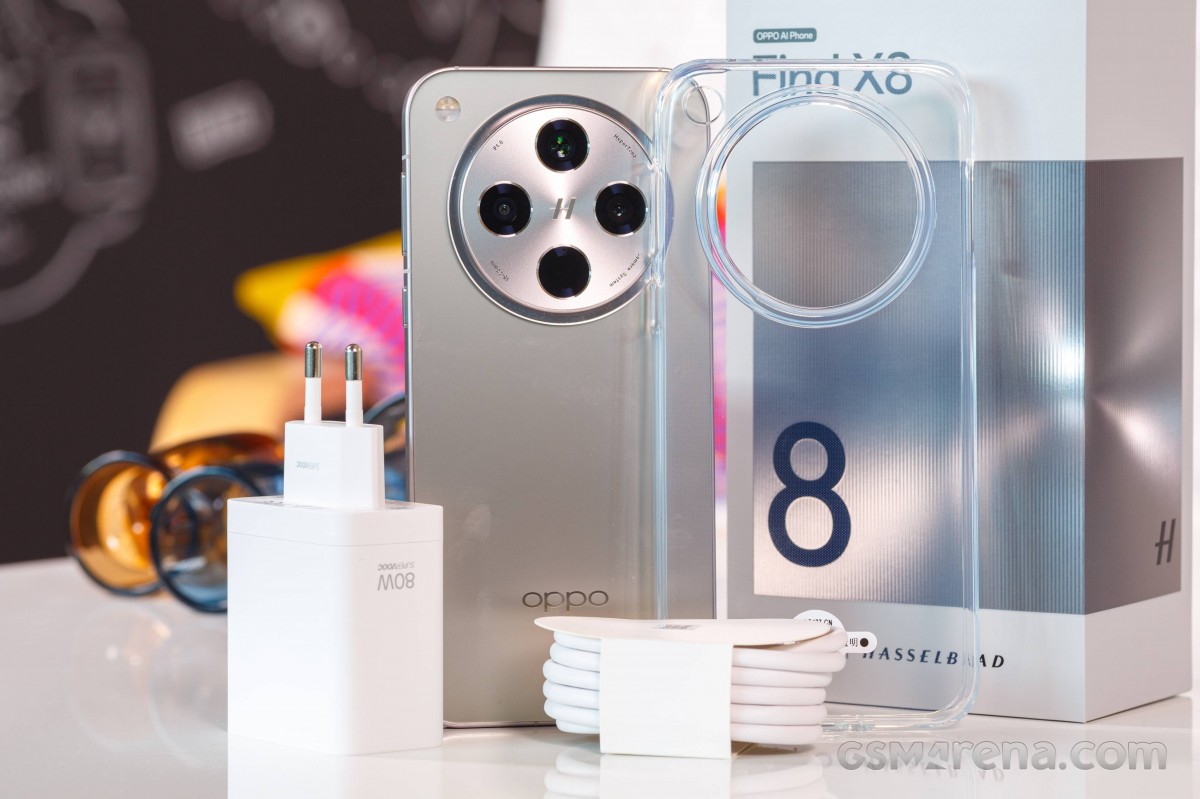
The accessory package for the Find X8 is pretty impressive by modern standards. You get a charger and a white, relatively short USB Type-A to Type-C cable. Besides that, you will also get a very nice, soft, and transparent TPU case for the phone, so you can start using it immediately.
It is worth noting that in Europe, the Find X8 and X8 Pro come without a charger in the box.
Design, build quality, handling
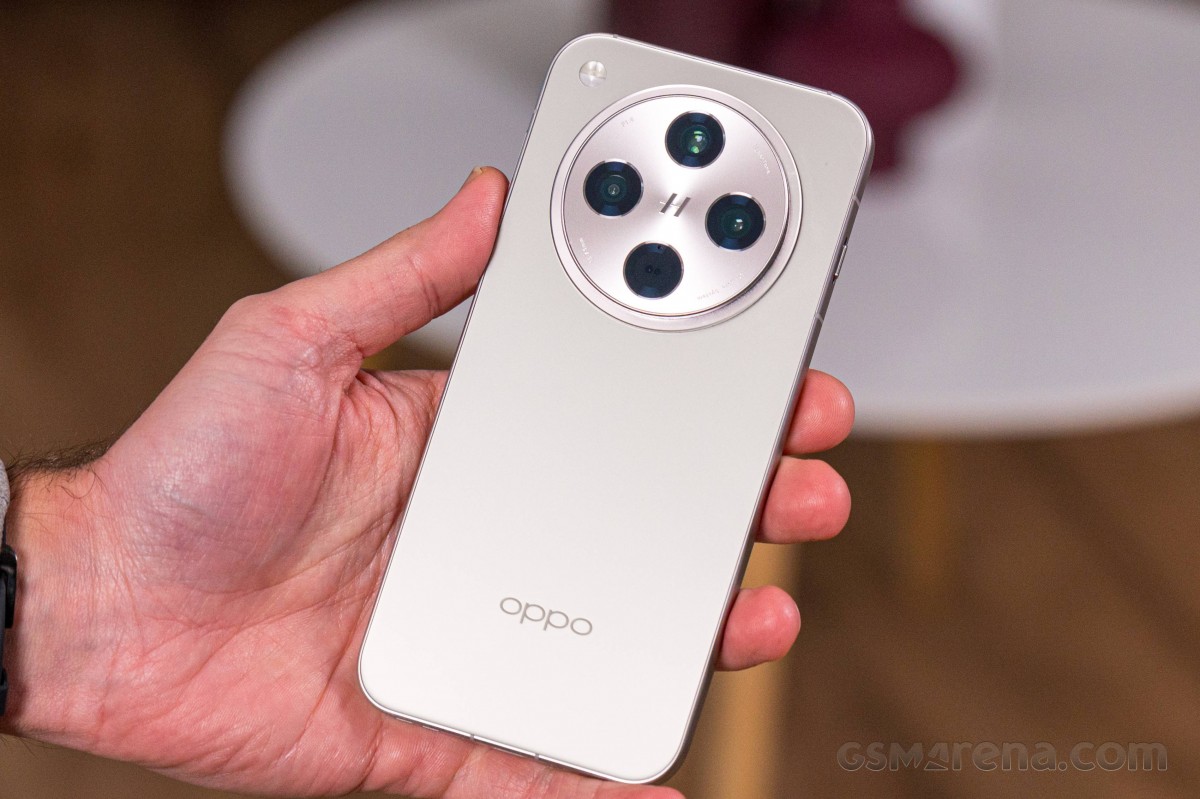
The Apple design inspiration for the Oppo Find X8 is very hard to miss, not necessarily from the back side, where that large, circular camera island kind of makes for a unique look. The overall body shape, however and the very rounded corners are unmistakenly Cupertino.
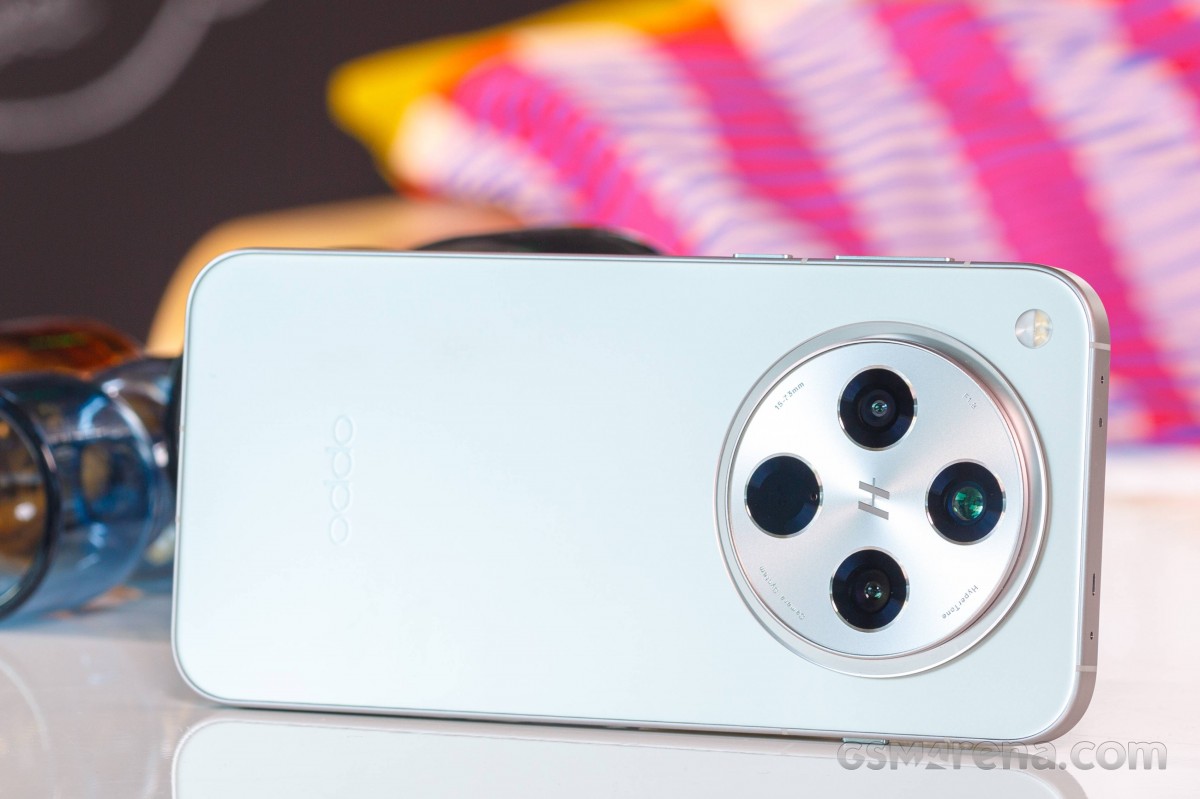
As long as Apple doesn't have any problems with this flattering imitation, we don't either. Plus, as we mentioned, the backside of the phone is still quite memorable and unique. The two-level circular camera island extends out quite a bit and features plenty of writing akin to real camera tech. We personally think the big HASSELBLAD "H" in the middle of the island is a bit tacky, but that might just be us. Besides, we think the camera island pulls off a "camera-inspired" design quite well.
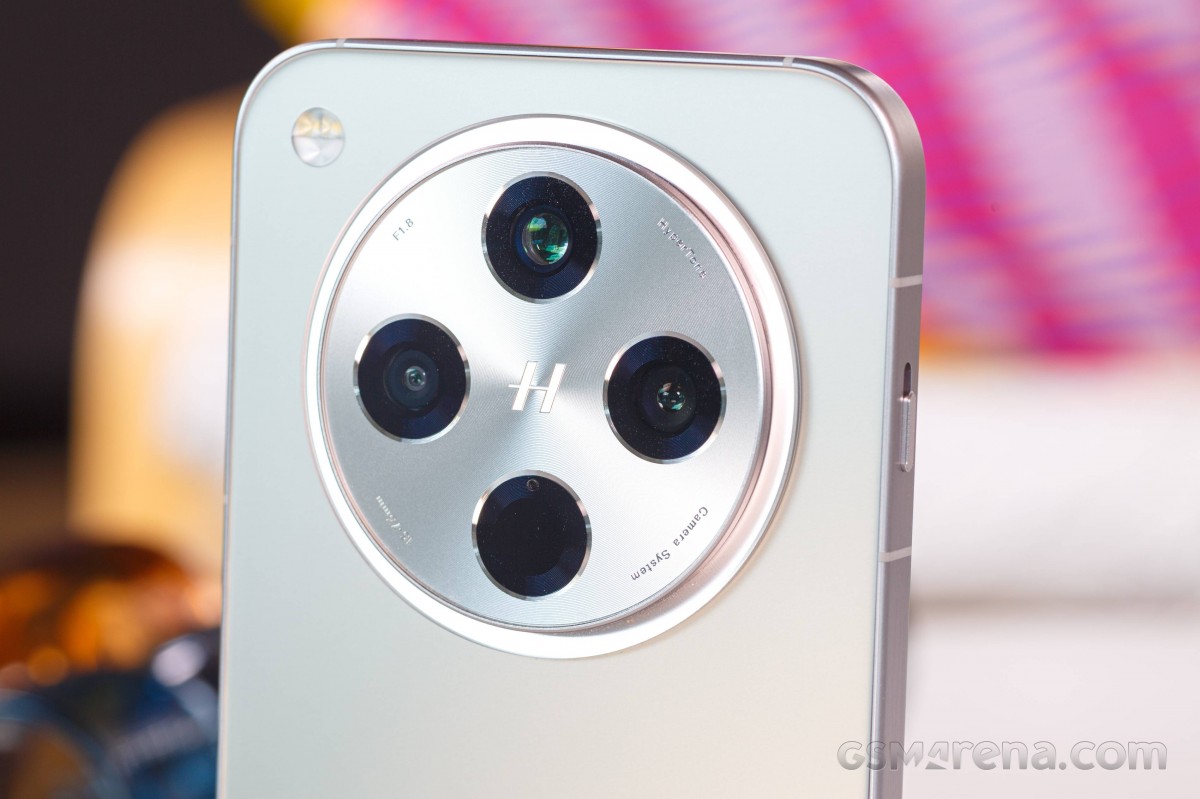
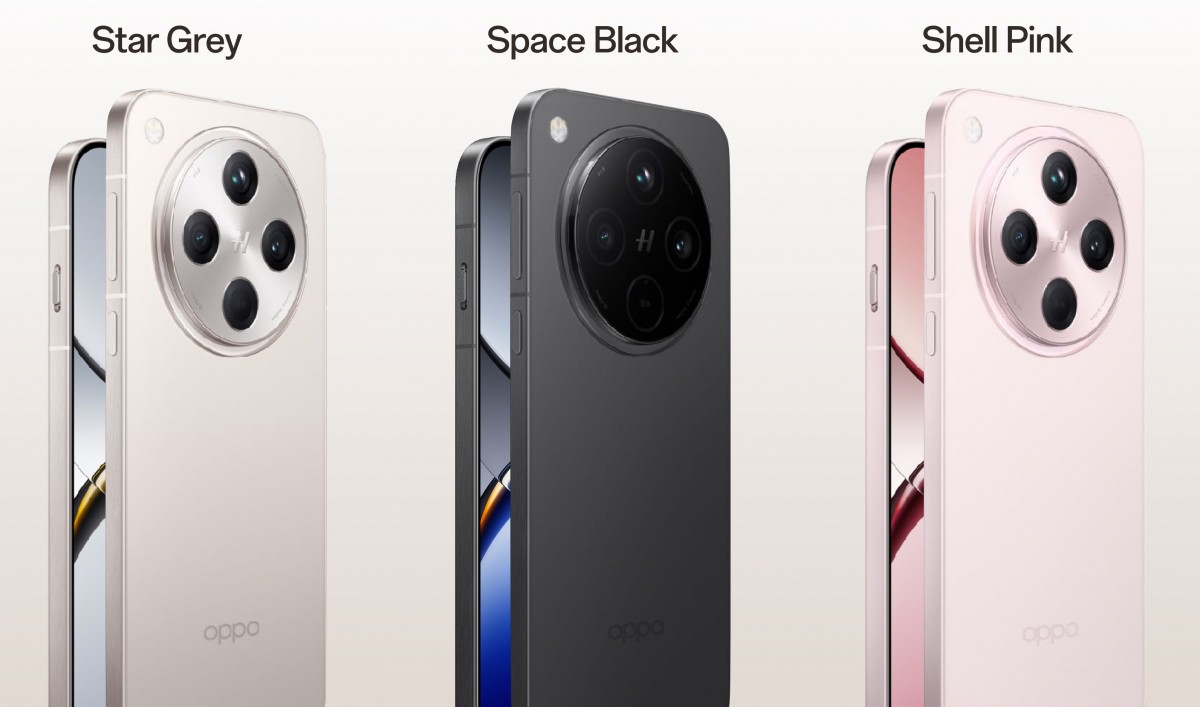
The back panel of the Find X8 features a smooth glass finish. You can get the phone in Star Grey, Space Black or Shell Pink. Our review unit Star Grey is sort of a metal-like, titanium-like, silver-like color. Very hard to pinpoint, but also very subtle and neutral, which we kind of like.
The Find X8 doesn't exactly have what we would call a standard button setup. Unfortunately, as mentioned, the dedicated camera shutter key of the Find X8 Pro is absent here. There is still one extra key, though - an alert slider. It toggles the sound mode of the phone between ring, vibrate and silent. We find it supremely convenient, and it is very well-positioned to be out of the way for general use.


Oppo Find X8
Besides that, you get a volume rocker and power button on the phone's right side. Both are well-positioned height-wise, pretty spacious and with a nice tactile feedback.
The top of the phone has plenty of holes, mostly for microphones, but also one for the built-in Infrared blaster - an increasingly rare feature.
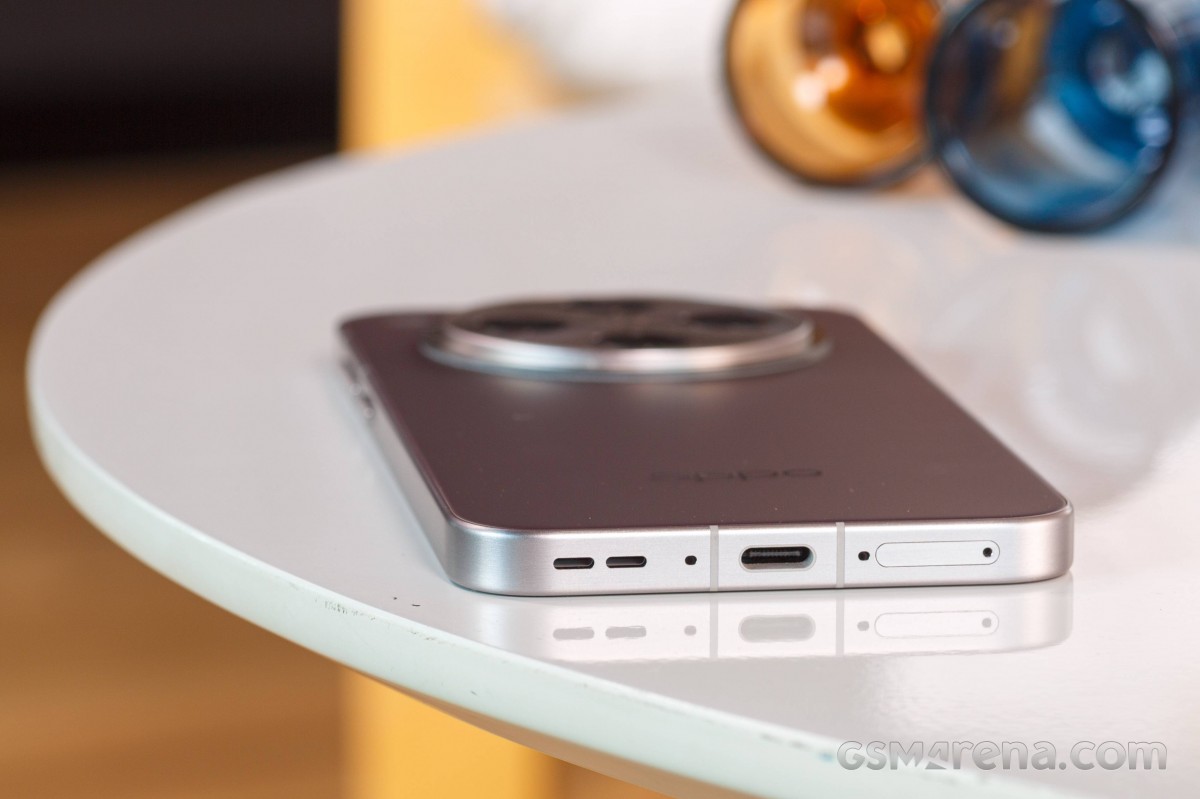
The bottom of the phone has more microphone holes and the main, bottom-firing speaker of the Find X8. The amplified earpiece handles the other audio channel, which is practically invisible above the display. In fact, there are no visible sensors or other hardware on the frame above the display. Everything is hidden away underneath the panel. There wouldn't be any room for extra hardware in the symmetrical display bezels since they are very thin, measuring just 1.45mm.
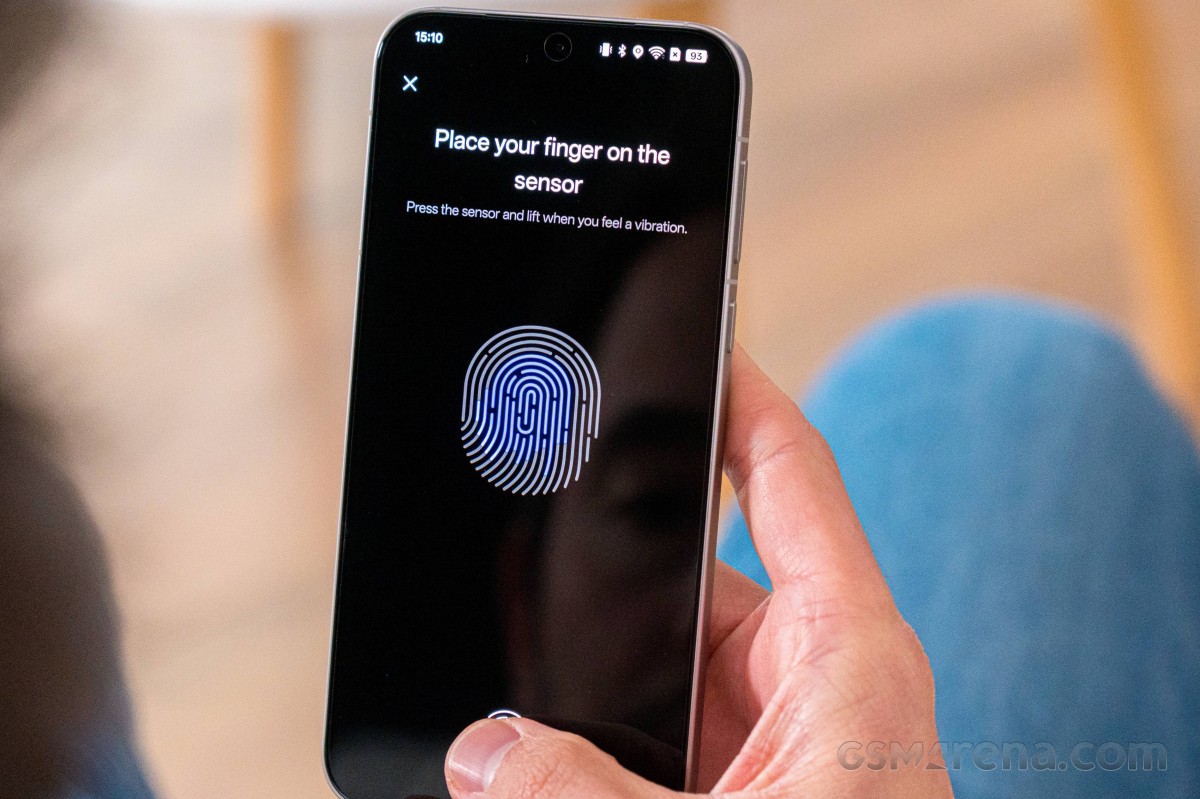
That includes an under-display fingerprint reader. It is of the simpler optical variety, but it generally works very well and is both speedy and accurate. It is well-positioned height-wise and is big enough to be comfortable.
The Oppo Find X8 looks and feels very premium, which is hardly surprising given its premium bill of materials. The frame is made of aluminum and rounded at all four corners and the front and back. It has a slightly brushed texture to it.
The front and back panels of the Find X8 are made of glass, Gorilla Glass 7i specifically.
The entire device is very well sealed and offers IP68/IP69 ingress protection, which means it should be able to survive a dip in up to 1.5 meters of fresh water for up to 30 minutes and exposure to water jets.
The middle frame doesn't really stain or gather any dirt. The glass back is a bit more susceptible to gathering grease from fingers and isn't particularly easy to keep clean, either.
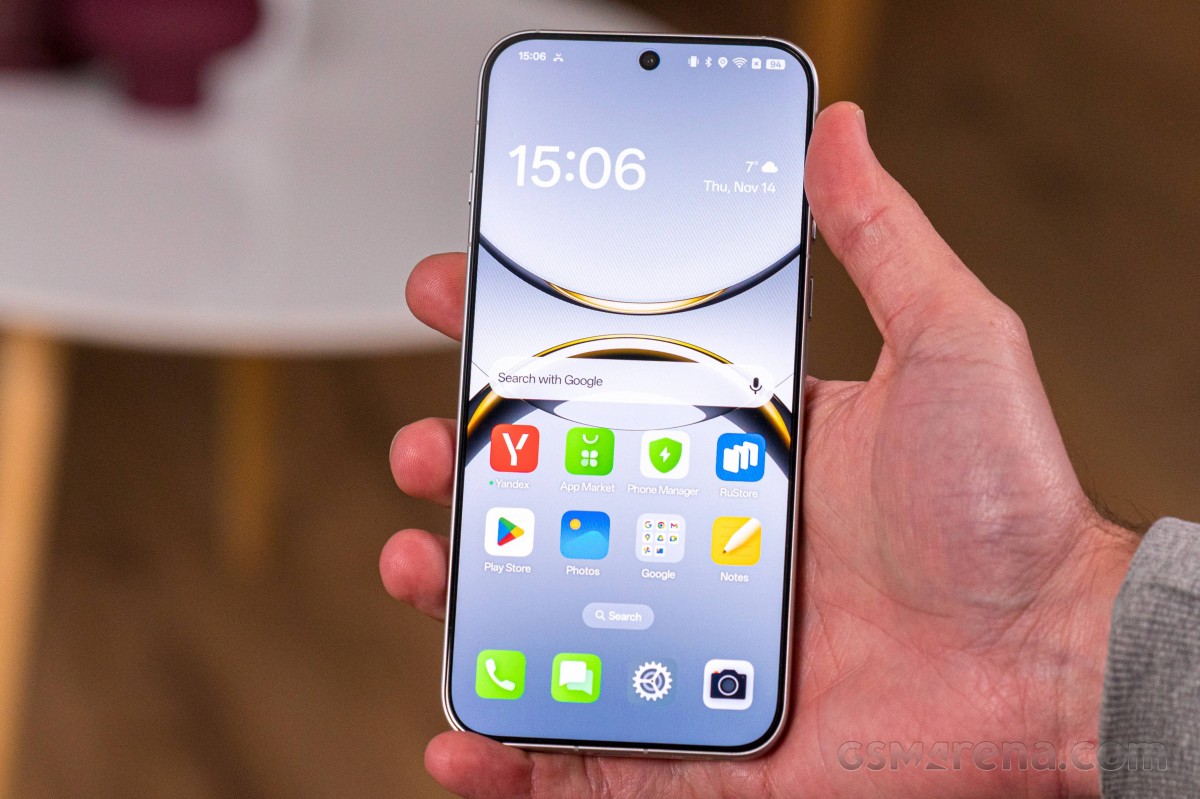
The Find X8 feels very solid and comfortable to hold. There is no flex to the frame or hollowness to the back. It is very well constructed.
Display
The Oppo Find X8 has a 6.59-inch display - a bit smaller than the 6.78 inches of the Find X8 Pro. It is still a pretty sizeable display. It is an AMOLED panel, but unlike the Oppo Find X8 Pro, it uses regular LTPS tech rather than LTPO. It has a 10-bit color depth. Oppo calls it a "ProXDR Display" and says it also features "Adaptive Eye Care". The display also has 3840Hz PWM dimming under 70 nits and DC dimming above 70 nits.
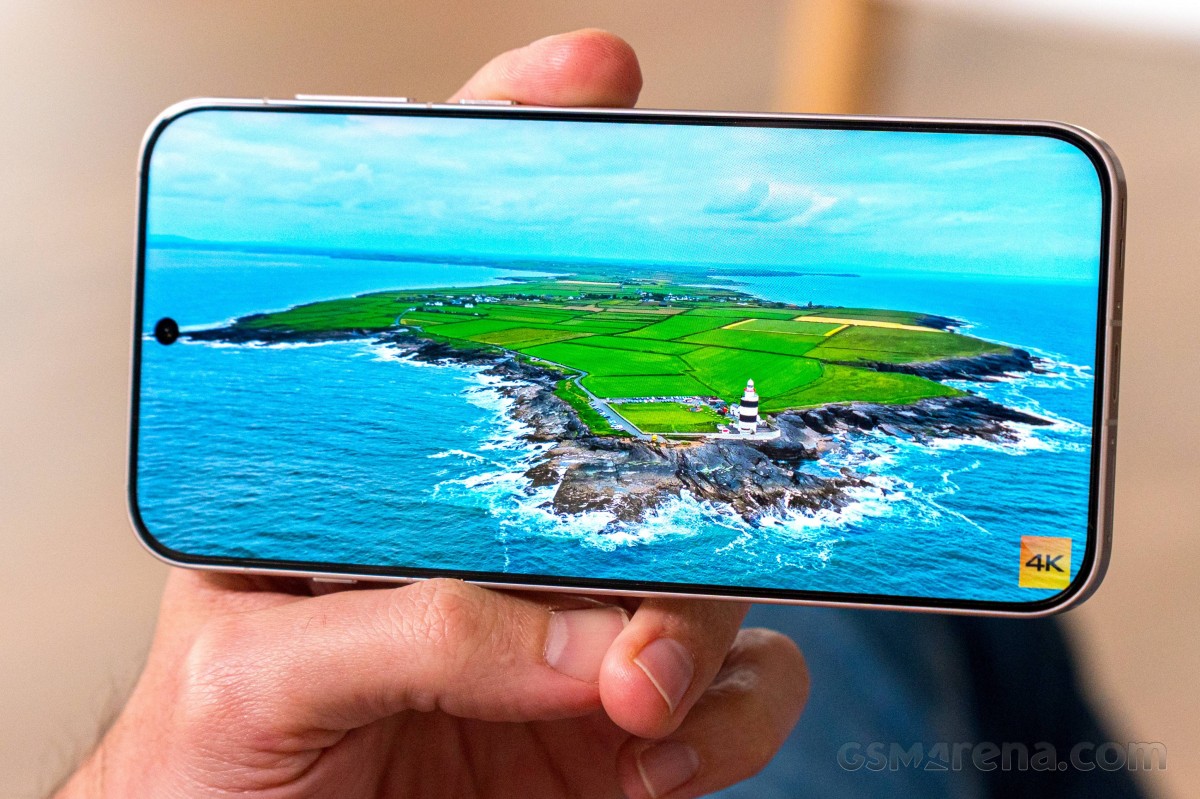
The display on the Find X8 gets pretty bright, though not quite on par with its competitors. Oppo claims that it should have around 800 nits of typical brightness, with 1,600 nits of max whole display brightness and a whopping peak of 4,500 nits.
In our standardized testing set up, we measured 878 nits by maxing out the slider and 1,364 nits of max auto brightness.
Brightness is just 2.2 nits at point while at a minimum on the brightness slider, which is low enough.
Max display brightness test
White test pattern, 75% fill (nits)
- Manual mode
- Auto mode
 Pixel 9 Pro XL
 Galaxy S24+
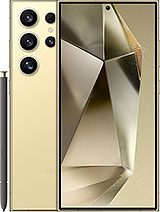 Galaxy S24 Ultra
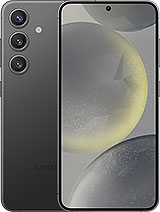 Galaxy S24
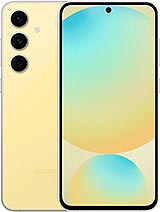 Galaxy S24 FE
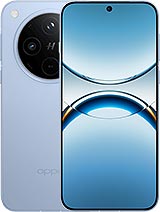 Oppo Find X8
 Oppo Find X8 Pro
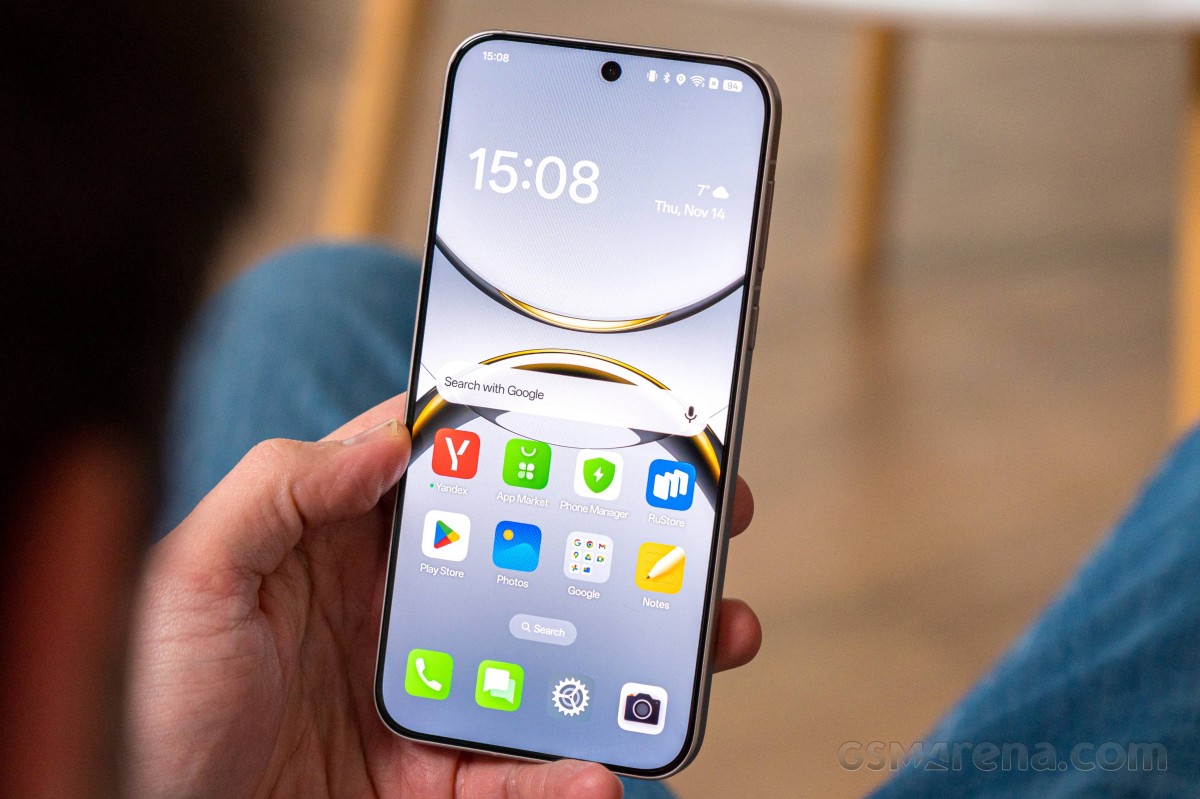
As mentioned, the Find X8 lacks the advanced LTPO tech of the Find X8 Pro. Still, it has a 120Hz display refresh rate and supports the refresh rate modes in total - 60Hz, 90Hz and 120Hz. In terms of refresh rate settings, the Find X8 is really versatile. There is an "Auto" mode, which does a great job of automatically adjusting the refresh rate. The general logic is that the refresh rate jumps up to 120Hz as you interact with the phone but then dials back to 60Hz when it is not doing anything. There is automatic video playback detection as well, that triggers 60Hz.
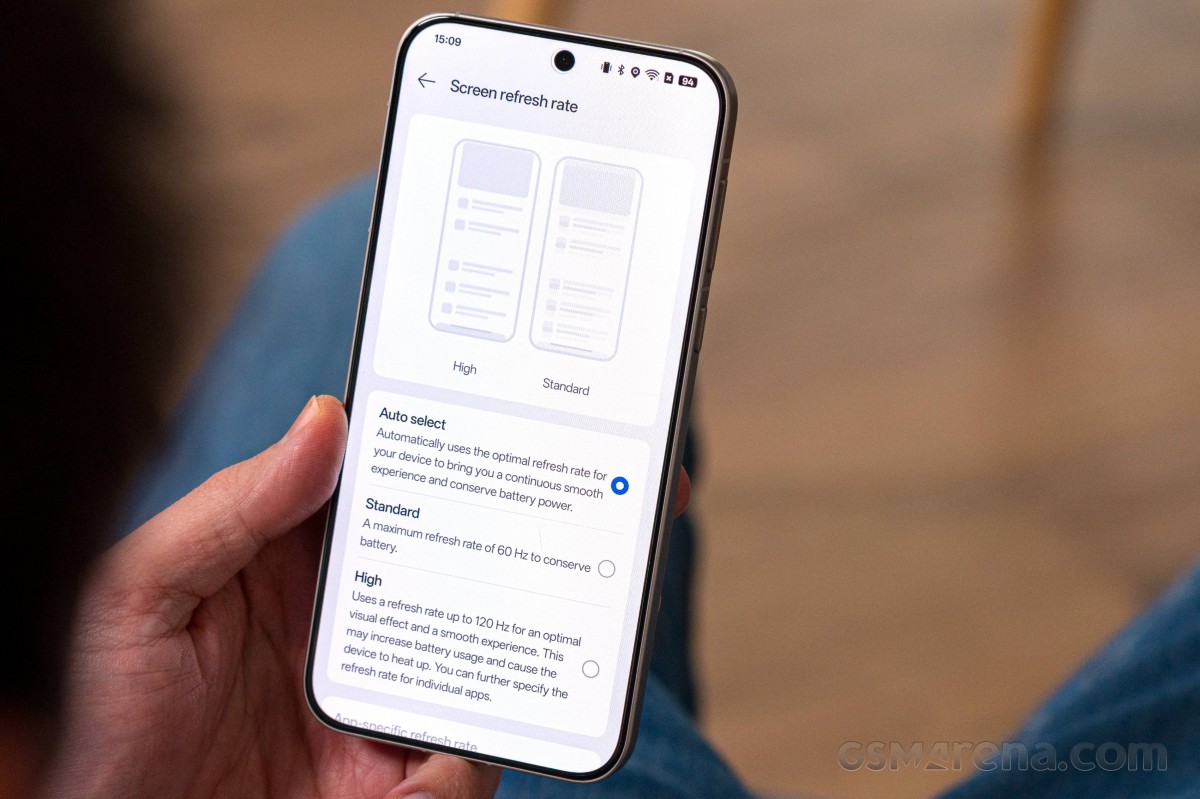
Beyond that, you can also set the refresh rate to a fixed 60Hz or a "fixed" 120Hz. The latter option includes a very handy per-app settings menu that you can use to set the desired refresh rate for each of your apps. This is great behavior for most use cases, including high refresh-rate gaming. We tried a few titles known to be able to push past 60fps and managed to get a high refresh rate to work on all of them either through the automatic mode or by manually setting 120Hz for them in settings.
As mentioned, the display on the Find X8 is quite bright and not only perfectly usable outdoors but also quite capable of a good HDR experience. The display has both Dolby Vision and HDR10+ certifications, while the phone can decode pretty much every HDR format out there: Dolby Vision, HDR10, HDR10+ and HLG. The Find X8 also has the highest possible Widevine L1 DRM certification, allowing apps like Netflix to offer up FullHD streams.
Battery life
Thanks to silicon carbon (Si/C) battery technology, Oppo managed to cram a large capacity battery inside the Find X8 - it's 5630 mAh, which is impressively large for the size of the phone. Thanks to its chemistry, the battery should also be more resilient to cold and potentially last more recharge cycles.
In our standardized testing, the Oppo Find X8 managed a solid 13:58 hours of Active Use Score. The phone did particularly well with video streaming.

 Oppo
OppoFind X8
5630 mAh
 Samsung
Galaxy A55
5000 mAh
 Xiaomi
Redmi Note 13 Pro
5100 mAh
Our new Active Use Score is an estimate of how long the battery will last if you use the device with a mix of all four test activities. You can adjust the calculation based on your usage pattern using the sliders below. You can read about our current battery life testing procedure here. For a comprehensive list of all tested devices so far, head this way.
Charging speed
The Find X8's spec sheet lists an 80W charging capability, and that's also what the bundled adapter is specced for. In our testing, it maxed at 72W at the very start of the charging process (from an empty battery) and quickly tapered off to lower power values - a common behavior that's gotten all the more noticeable with the silicon carbon batteries we've been getting as of late.
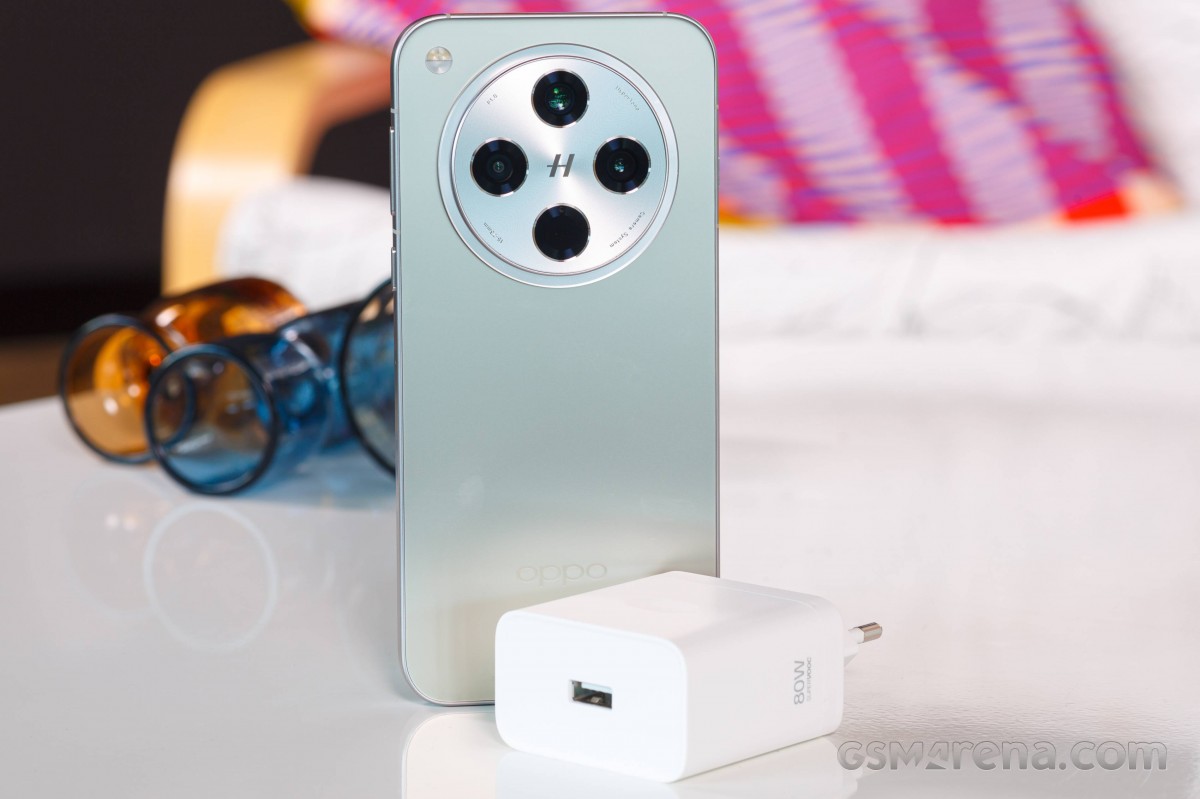
Charging speed is not among the fastest - we clocked an empty-to-full time of 52 minutes, but we like that we were looking at 70% at the half-hour checkpoint.
We should probably start adjusting expectations going forward - the sub-20 minute charging times we got from dual-cell graphite anode batteries of yesteryear don't go well with today's push for higher energy density. It's probably not the worst of tradeoffs, though.
Charging speed
- in 15 min
- in 30 min
- Time to full charge (from 0%)
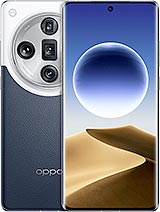 Oppo Find X7 Ultra
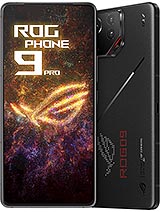 ROG Phone 9 ProGalaxy S24+
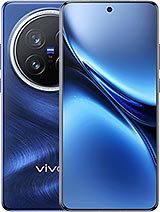 vivo X200 Pro
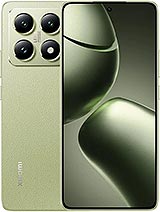 Xiaomi 14TOppo Find X8Galaxy S24 Ultra
The above speeds are for the bundled proprietary charger, but the Find X8 also supports regular USB Power Delivery at up to 55W - or so Oppo says. In our experience with half a dozen other makers' and aftermarket PD adapters, we only got up to 26W. The total charging time was around 60 minutes, and we got 54% in half an hour.
The X8 also supports wireless charging at up to 50W when using an in-house AirVOOC pad. Reverse wireless charging is also on the menu at up to 10W.
Color OS has a reasonable set of battery saver and battery health options. It has the Smart charging toggle that attempts to learn your charging habits and does the final top-off before it predicts you'll need the phone. It also has the option to limit the charge to 80% when it detects you've got the phone plugged in for prolonged amounts of time. You can also turn off the Smart rapid charging and have the Find X8 charge slower than its maximum capability - the difference was minimal in our experience.
Speakers - loudness and quality
The Find X8 employs a hybrid speaker system with one bottom-firing unit and another one above the display that directs sound toward the front and serves as an earpiece for voice calls. As Oppo normally goes about this, both speakers will also output the opposite channel's track at a lower volume in addition to their own. The channels are otherwise assigned based on the phone's orientation when in landscape, while the top speaker gets the left channel when the handset is held vertically.
The Find X8 Pro got a 'Very Good' rating for loudness in our test - on par with last year's Ultra and pretty much any potential competitor. The output is pretty clean, with crisp mids and well-defined highs. There is even some bass. Though, don't expect anything spectacular. It's a solid speaker system, even if not quite on the level of something like the iPhone 16 Pro Max or the Samsung Galaxy S24 Ultra.
 Oppo
OppoFind X8-24.0 LUFSVery goodloudness score
OppoFind X8 Pro-24.9 LUFSVery goodloudness score❌︎
Use the Playback controls to listen to the phone sample recordings (best use headphones). We measure the average loudness of the speakers in LUFS. A lower absolute value means a louder sound. A look at the frequency response chart will tell you how far off the ideal "0db" flat line is the reproduction of the bass, treble, and mid frequencies. You can add more phones to compare how they differ. The scores and ratings are not comparable with our older loudspeaker test. Learn more about how we test here.
Connectivity
The Find X8 is a dual Nano-SIM 5G device. It supports SA/NSA Sub-6 connectivity concurrently on both SIM slots. There is also eSIM support.
The Dimensity 9400 is pretty stacked when it comes to location services. It supports dual-band GPS (L1+L5), BDS (B1I+B1c+B2a+B2b), GALILEO (E1+E5a+E5b), QZSS (L1+L5), GLONASS and NavIC (L5).
There is modern Wi-Fi 7 support for local connectivity, though, unfortunately, just dual-band, so no 6 GHz is available.
You also get Bluetooth 5.4 with LE and support for aptX HD and LHDC 5. There is NFC as well, with NFC-SIM, HCE, eSE, and eID. Plus, you get an Infrared blaster. There is no FM radio and no 3.5mm audio jack.
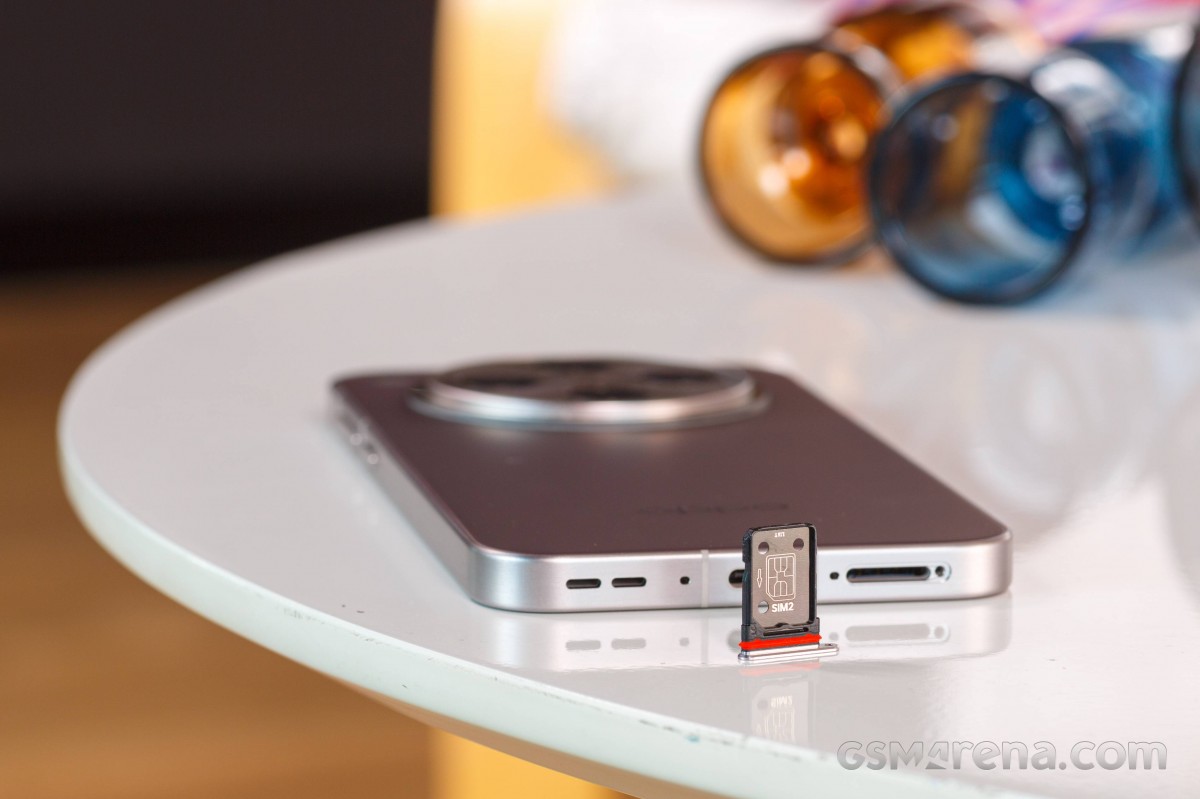
The Type-C port on the Find X8 is backed by a relatively fast SuperSpeed 5 Gbps USB 3.0 or 3.2 Gen 1x1 data connection. It supports USB Host/OTG but does not have any additional extras like video output.
There is a sizeable collection of onboard sensors, including a BOSCH bmi2xy accelerometer and gyroscope combo, AKM akm09910 magnetometer and compass combo, an OPLUS Fusion Light Sensor Next Gen and an AMS tcs3743 hardware proximity sensor. There is no barometer onboard.
Android 15 with Color OS 15.0 on top
The Find X8 is running Color OS 15 on top of an Android 15 core. Oppo's software update policy in store for the Find X8 includes 5 OS releases and 6 years of security updates - not bad at all.
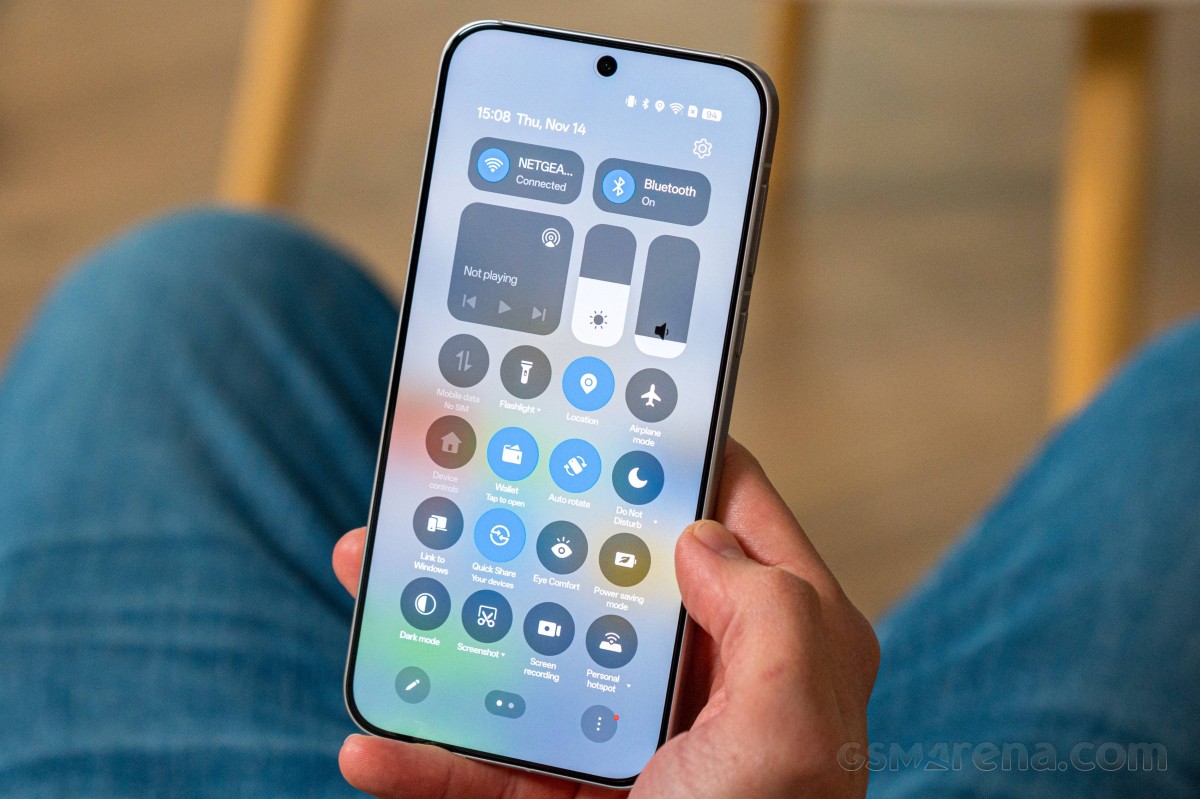
Oppo says that ColorOS has received a visual overhaul with this release, but what we're seeing is more of a gentle facelift. Most notable in day-to-day operation is the restyling of the quick settings, now treated to a 'Now playing' widget and a reshuffling of the big bubbles.
Also somewhat readily visible is a refresh in the iconography. However, the settings menu, for example, is largely unchanged in its presentation, though the About screen does look nicer now. A new Flux Theme comes with redesigned widgets, icons and new smooth transitions between the Always-On Display, Lock Screen and the wallpaper.
Oppo says there is a new Luminous Rendering Engine. It apparently has over 800 redesigned animations across ColorOS 15 and features 18% faster touch response and 40% better stability.
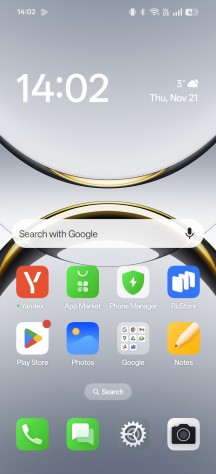
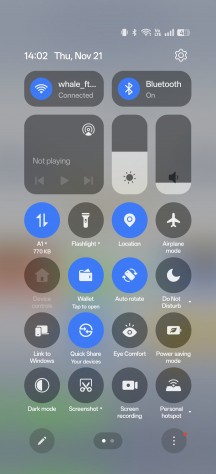
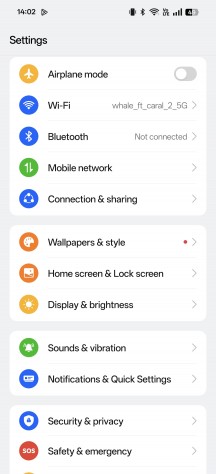
Color OS on the Oppo Find X8 Pro
Of course, plenty of bits are sprinkled around Color OS with an AI label on them. Google's Circle to search doesn't say AI on the tin, but it comes standard and replaces the similar in functionality in-house AI Screen Recognition feature we saw on the Realme GT 7 Pro (and the 13 Pro+ before it). The Gemini AI assistant is on board, too.
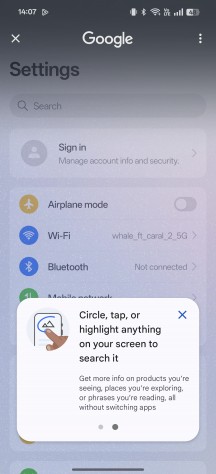
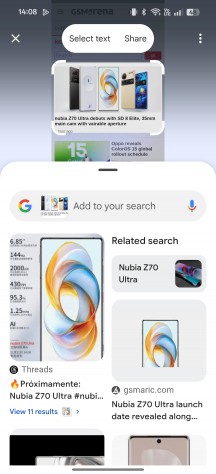
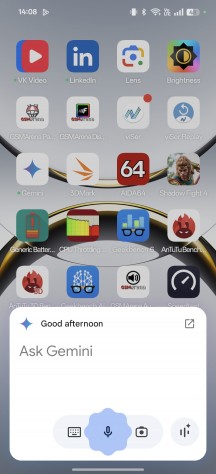
Circle to search • Gemini
There's also an 'AI Toolbox', which is a set of utilities to help make your life easier - AI Summary will attempt to condense a text into a numbered list of key points, AI Speak will read a text out loud, and AI Writer will try and write a text for you. These are all accessible from the Smart Sidebar only when applicable, and you may not be able to find them directly with a search on the phone as standalone apps.
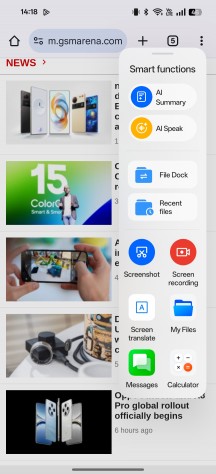
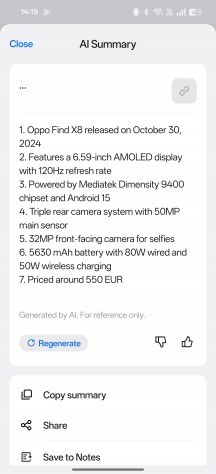
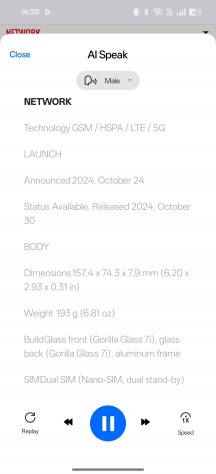
AI Toolbox
An AI Studio app is also present. It uses cloud-based generative AI to render photorealistic images in different styles based on a photo of yourself. It's a credit-based system as opposed to being unlimited, but you get a bunch of credits when you first sign up, and you can replenish them by being a regular on the app.
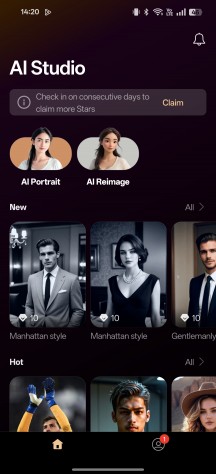
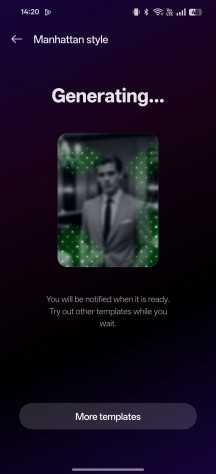
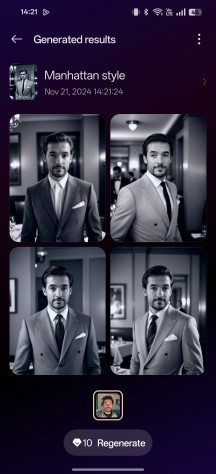
AI Studio
Then there's a handful of AI-based photo editing tools in the gallery - some were already on previous Color OS versions. AI Eraser, AI Ultra Clarity, and AI Unblur are more or less self-explanatory. The AI Editor can also be set to automatically suggest one of its tools when it sees fit.

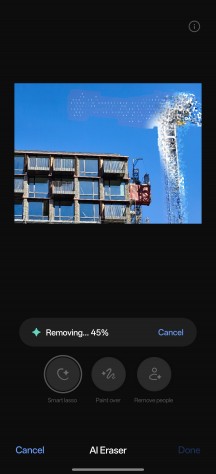
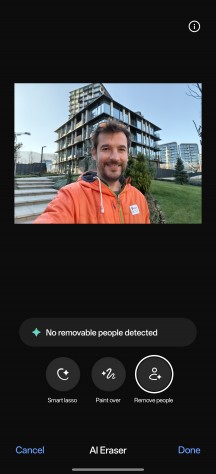
AI Editor
Benchmarks and performance
Oppo went with the Dimensity 9400 for the Find X8 (also the Find X8 Pro). The Mediatec SoC isn't necessarily a bad option; it is a supremely powerful piece of kit manufactured using a 3nm process by TSMC.
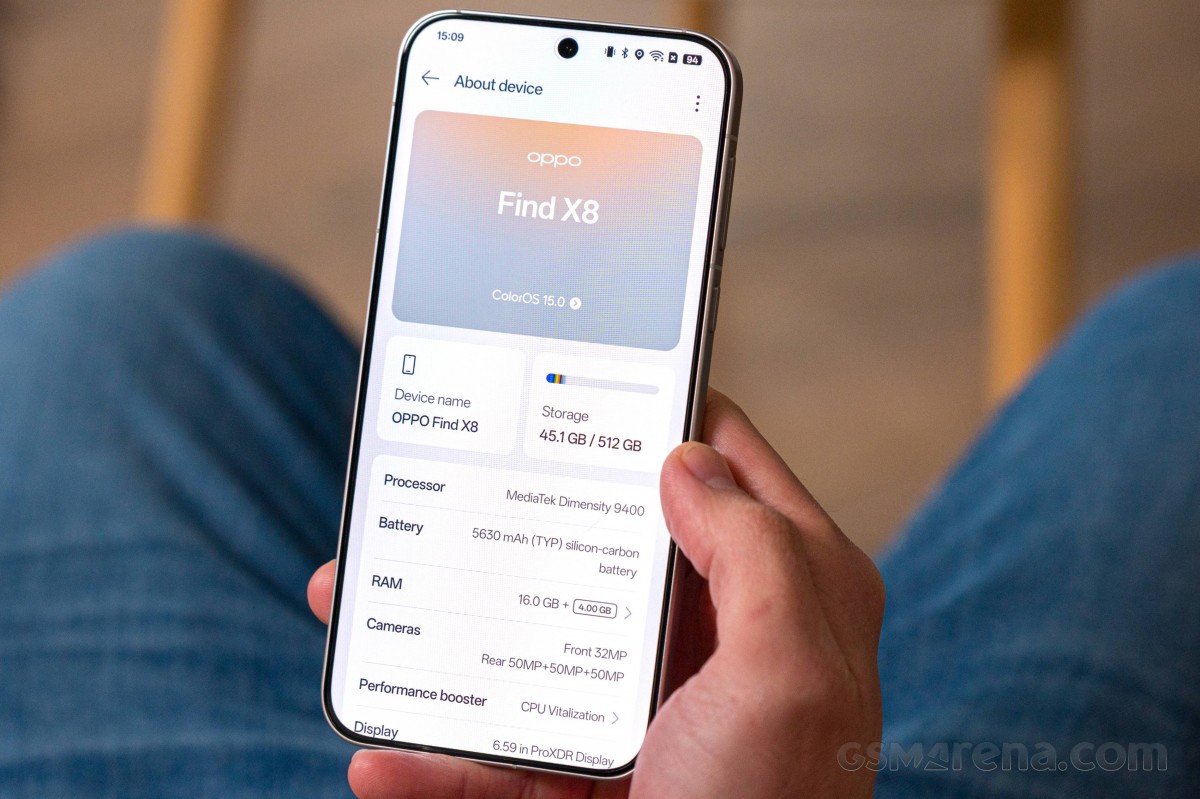
The Dimesity's CPU uses an all-big-core design, with one 'prime' Cortex-X925 core (up to 3.63GHz), three Cortex-X4 units (2.3GHz), and four Cortex-A720 cores (2.4GHz). Madiatek promises it should be 35% more powerful than the D9300's processor in single-core tasks. The Immortalis-G925 GPU, meanwhile, should offer performance improvements of around 40%. Power efficiency should be up 40%, too, they say.
The Oppo Find X8 has a whole lot of available memory configurations, even more, in fact than the Find X8 Pro. You can get a unit with 256GB 12GB RAM, 256GB 16GB RAM, 512GB 12GB RAM, 512GB 16GB RAM or 1TB 16GB RAM. You get fast UFS 4.0 storage chips. Unfortunately, there is no storage expansion.
We already saw the D9400 in action in the vivo X200 Pro. The Find X8 and X8 Pro numbers are more or less in line with those results. The ROG Phone squeezes out a bit more performance through its performance mode and active external cooler. It is also interesting to note that the Dimensity 9400 is not that far from Qualcomm's latest Snapdragon 8 Elite. The Elite has a bit of an advantage in CPU scores, while the Dimensity 9400 has a bit of an edge in the GPU department.
GeekBench 6
- Multi-core
- Single-core
ROG Phone 9/9 Pro (X Mode+) Realme GT 7 ProOppo Find X8Oppo Find X8 Provivo X200 Pro
 iPhone 16 Pro Max
 nubia Z60 Ultra
AnTuTu is a much more compound benchmark with graphical and memory tests in its roster. It paints a very similar picture. Performance-wise, the Oppo Find X8 is definitely in the top bracket of current smartphones.
AnTuTu 10
ROG Phone 9/9 Pro (X Mode+)vivo X200 ProOppo Find X8Realme GT 7 ProOppo Find X8 Pro Zenfone 11 Ultranubia Z60 Ultra
As already mentioned, the Dimensity 9400 and its Immortalis-G925 have a slight edge in GPU performance over the Snapdragon 8 Elite and the Adreno 830.
3DMark
- Wild Life Extreme (2160p)
- Solar Bay (1440p)
vivo X200 ProOppo Find X8Oppo Find X8 ProRealme GT 7 ProROG Phone 9/9 Pro (X Mode+) nubia Z60 Ultra Leading Editionnubia Z60 Ultra
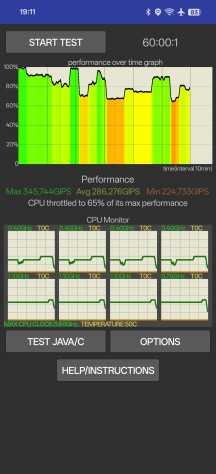
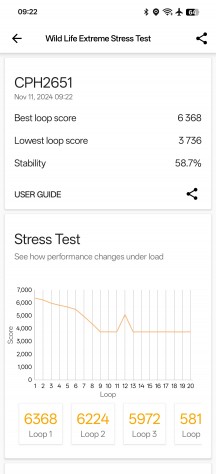
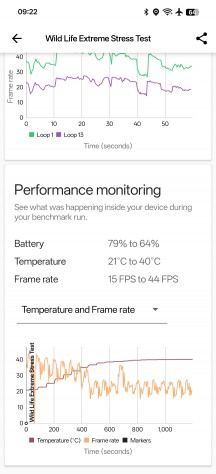
The Find X8 has a sophisticated cooling system with a high-efficiency vapor chamber, a graphite layer, and a highly conductive thermal gel placed within the dual-layer motherboard.
Under prolonged load, the Find X8 Pro behaved similarly to the vivo X200 Pro, recording a relatively gradual decline in performance in the CPU Throttling test, with a small peak somewhere down the line and a 65% lowest result.
A powerful triple camera setup
The regular Oppo Find X8 doesn't have the dual telephoto camera setup of the Pro model, but it is still a powerful system, dubbed the "Hasselblad Master Camera System". It offers plenty of versatility.
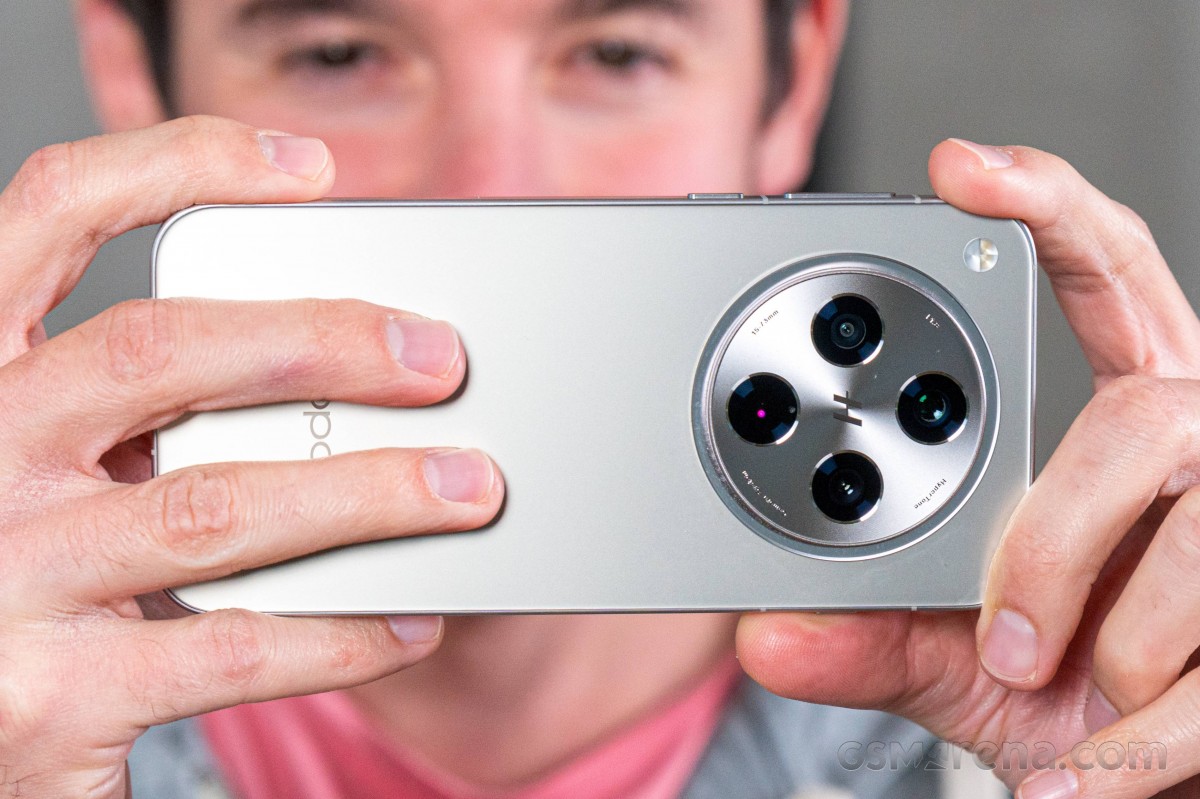
Just like the Find X8 Pro, the regular Find X8 has a 50MP main camera. Don't expect quite as potent hardware, though. The vanilla model uses a Sony LYT-700 sensor instead of the LYT-808. It is a smaller sensor still with a 1/1.56" size.
Thankfully, the absence of the second telephoto and the swapped main camera sensor are the only two downgrades to the camera setup compared to the Pro model. The 3x zoom telephoto is still based on the Sony LYT-600 imager. It's placed behind a new lens assembly that features two prisms, making it more compact.

The ultrawide camera is yet another 50MP unit based on the Samsung ISOCELL JN5. It's a pretty small 1/2.76" sensor. Still, the ultrawide does have auto focus, which makes it pretty versatile since it can double as a macro shooter.
- Wide (main): 50MP Sony LYT-700 (1/1.56", 1.0µm - 2.0µm), f/1.8, 24mm, multi-directional PDAF, Laser AF, OIS; 2160p@60fps
- Ultrawide: 50MP Samsung ISOCELL JN5 (1/2.76", 0.64µm - 1.28µm), f/2.0, 15mm, multi-directional PDAF; 2160p@60fps
- Telephoto, 3x: 50MP Sony LYT-600 (1/1.95", 0.8µm - 1.6µm), periscope lens, f/2.6, 73mm, multi-directional PDAF, OIS; 2160p@60fps
- Front camera: 32MP Sony IMX615 (1/2.74", 0.8µm - 1.6µm), f/2.4, 21mm, fixed focus; 2160p@60fps
Unfortunately, the iPhone-inspired camera key from the Find X8 Pro is not present on the vanilla Find X8.
The camera interface is pretty busy but also quite well-organized and not what we would call chaotic.
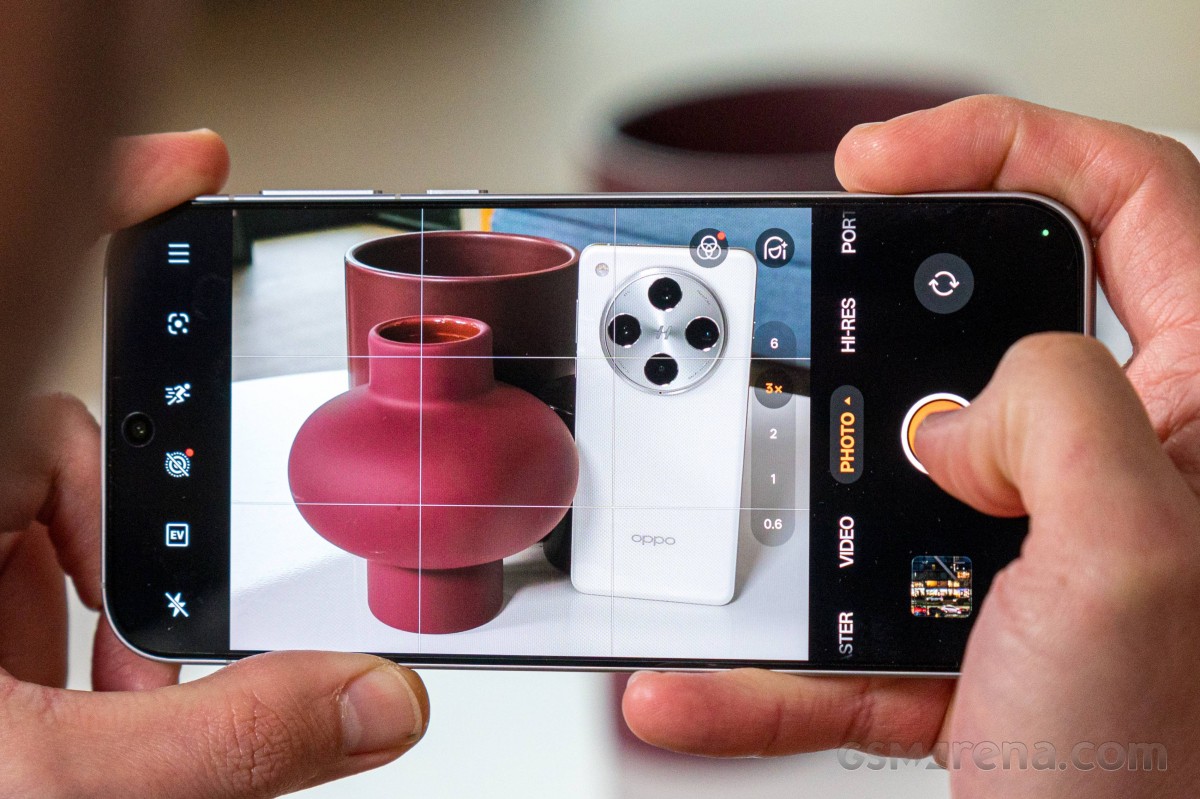
There is a pretty full-featured Pro camera mode as well.
Daylight photo quality
Main camera
The main camera on the Find X8 captures binned stills in around 12.5MP by default. These photos are very detailed and clean, with practically no noise in the frame. Colors look great and very natural.












Oppo Find X8: 12.5MP main camera samples
Here are some portrait mode shots at 1x from the main camera. Subject detection and isolation are great, and so is the quality of the background blur.



Oppo Find X8: 12.5MP main camera portrait mode samples
The main camera can do 2x digital zoom photos. These come out relatively sharp and detailed.









Oppo Find X8: 12.5MP main camera 2x zoom samples
Here are some 2x portrait shots as well.




Oppo Find X8: 12.5MP main camera 2x zoom portrait samples
Telephoto camera
The 3x telephoto on the Find X8 may not be able to focus too close (minimum focus distance is around 50cm), but it's pretty great for mid to long-range shooting. We're getting clean and sharp photos with just slightly too much digital detail processing. White balance is ever so slightly off.











Oppo Find X8: 12.5MP telephoto camera 3x samples
The telephoto camera works great for portraits. Detail is great, and so are the colors. Skin texture comes out looking particularly believable and natural.




Oppo Find X8: 12.5MP telephoto camera 3x portrait samples
The Oppo Find X8 lacks a second 6x telephoto like the X8 Pro, but it can still shoot digital 6x zoom shots with the existing 3x telephoto snapper. These look surprisingly competent, with great detail and just a bit of expected softness, particularly on surfaces.









Oppo Find X8: 12.5MP telephoto camera 6x samples
Ultrawide camera
The ultrawide photos have excellent sharpness and detail and no noise in bright daylight. Dynamic range is nicely wide, and color reproduction is quite pleasing.






Oppo Find X8: 12.5MP ultrawide camera samples
Selfie camera
We haven't been overly enthused by a number of 32MP selfies lately, and Oppo's implementations are on that list. The amount of detail in the frame doesn't match up well with the expectations set forward by the resolution, but if you learn to think of these as 10-12MP images and expect about that much detail from them (possibly downscale them, even), you should be reasonably happy. That said, colors and dynamic range are very good here.
No amount of rationalizations will change the fact that there's no autofocus, though. That's quite unfortunate, though the focal plane of this particular selfie is pretty wide and forgiving as is.






Oppo Find X8: 32MP selfie camera samples
Low-light camera quality
Main camera
At night, the Find X8's main camera does a wonderful job. It captures well-exposed images with a wide dynamic range, excellent shadow development and competent highlight preservation. It also maintains a very natural detail rendition - no extreme sharpening or watercolor-like effects. The Find wasn't fazed by odd lighting and kept its white balance in check while also delivering very likable output in terms of saturation.





Oppo Find X8: 12.5MP main camera low-light samples
There is an automatic night mode on the Find X8. It triggers on its own very dependably. Beyond that, there is also a manual night mode that sometimes offers longer capture times and more stacking, at least in theory. In practice, we didn't notice much of a difference in overall quality.
At 2x zoom, global parameters remain unchanged, but sharpness drops noticeably, and these images are best suited for viewing in small sizes.





Oppo Find X8: 12.5MP main camera 2x zoom low-light samples
Telephoto camera
The telephoto camera's results are more to our liking. The 3x shots have very good detail and look nicely organic. Dynamic range is excellent, and colors are pleasing too.





Oppo Find X8: 12.5MP telephoto camera 3x zoom low-light samples
At 6x zoom during the night, the phone relies quite heavily on algorithmic processing and particularly sharpening. Even so, these photos look surprisingly good. The detail is there, colors are nice and natural with well-handled light sources as well as highlights. Darker areas are less well-developed.





Oppo Find X8: 12.5MP telephoto camera 6x zoom low-light samples
Ultrawide camera
The ultrawide does a respectable job in its own context. Its images have good detail, dynamic range is excellent, colors are generally on point, with a hint of extra warmth here or there.





Oppo Find X8: 12.5MP ultrawide camera low-light samples
Video capture quality
The Find X8 records video up to 4K60 with all of its cameras - the three on the back and the selfie camera. There's no 8K capture mode (nor should there be), and there's no 24fps capability directly in sight.
The default codec is h.265, but you can switch to h.264. Dolby Vision capture is available, too, masked behind the HDR toggle in the viewfinder. There's also a Movie mode that works in a 21:9 aspect (so 3840x1648px, no other resolution), where you can tweak exposure parameters, focus and white balance.
'Regular' electronic video stabilization is available in all resolutions and frame rate combos, and then there's Ultra steady mode, which also works in all modes - go figure.
You can check out the playlist below, which includes multiple video samples.
4K video quality from the Find X8's main camera is great, with wide dynamic range, accurate white balance and vibrant colors. Detail is very good, but we still feel it could be slightly better. 2x zoom clips are properly soft. We'd avoid shooting at that level. The 3x telephoto captures nicely detailed videos during the day. At 6x, videos from the telephoto are a bit soft as well and slightly noisy too. The ultrawide's footage is slightly noisy in the shadows but still solid overall.
The main camera maintains its composure at night and returns very good results with well-balanced grain-vs-detail processing. The 3x telephoto is somewhat surprisingly good, too. We would probably shy away from capturing 2x and 6x digital zoom videos, though. The ultrawide, meanwhile, returns somewhat harsh highlights but isn't half bad overall, either.
Stabilization is very good on the Find X8, with only some imperfections on the main camera when walking - the final footage has a bit more shake as your foot hits the ground than we'd like. Besides that, all cameras are great at steadying your clips, and the telephoto looks especially impressive. Panning is quite smooth, too.
The competition
Despite some feature cutbacks from the Pro model, the Find X8 is still a proper flagship and is priced as such. The phone just recently made its international debut, with a price tag of IDR 13,999,000 for the 12/256 GB option and IDR 15,999,000 for 16/512 GB, which translates to $880 and $1,000, respectively. In India, the X8 prices are INR 69,999 ($830) or INR79,999 ($945). That's a pretty penny to pay for a smartphone, but you are getting quite the hefty specs sheet with the Find X8. A budget in the $1,000 ballpark also opens up the room for quite a few interesting competitors.
 Left: Find X8 • Right: Find X8 Pro
The Galaxy S24 Ultra is one of the select few two-tele cameraphones, and it just might be better for photo and video capture than this Find, though even if it is, it's probably not by a big enough margin for that to be the deciding factor. The Galaxy wins for versatility thanks to its S Pen and some of OneUI's unique features (take DeX, for example). The Find scores slightly higher in the endurance department and also runs on a next-gen chipset. It's also much more compact.
The vivo X200 Pro is another camera-centric offering out of China that should be going global sometime soon. This one matches the Find for IP rating, has the same chipset, and broadly similar battery life and charging capability. The vivo might be a better cameraphone, though, where its specific type of single telephoto solution can have advantages.
Samsung Galaxy S24 Ultra • vivo X200 Pro • Realme GT 7 Pro
If you would rather go with Qualcomm, then Realme has an interesting flagship in the GT 7 Pro. It is rocking the new Snapdragon 8 Elite chipset. Plus, you get excellent build quality and ingress protection, a great 120Hz, LTPO AMOLED display, a large battery (though you should check your local version for the exact capacity) and a comparable and versatile camera setup with a 3x telephoto.
 Left: Find X8 • Right: Find X8 Pro
Our verdict
The regular Oppo Find X8 is an excellent, well-rounded device. Sure, there are a few compromises compared to the Pro model. The most notable one is probably the absence of the second telephoto camera, the missing camera key and the smaller battery. Even so, though, we found the Find X8 to be an excellent camera phone, and the trade-offs are reasonable considering its smaller size and lower price. Even the digital 6x zooms it offers aren't half bad.

The non-LTPO nature of the display on the vanilla model is a relatively minor drawback. You still get pretty good brightness output, and that hasn't left a notable dent in the battery life.
The super powerful chipset is about as good as they come and the newly-standard next-level water sealing brings extra peace of mind.

Of course, the Find X8 Pro is a higher-grade smartphone, but that doesn't put the vanilla Find X8 in a bad light - it remains an excellent buy in our book.
Pros
- IP69 rating - so you can pressure wash it if you want.
- Pretty good battery life, particularly good at video streaming.
- Mediatek SoC at least as good as the latest Snapdragon.
- Five OS updates and six years of security patches are pretty good.
- Competent camera system overall, great zoom action, nice closeups, surprisingly good low-light video.
- Wi-Fi 7; eSIM support, Infrared port.
Cons
- EU model lacks a charger in the box.
- No dedicated camera button like on the Pro.

